
Continuous penetration testing for LGPD and Banco Central programs
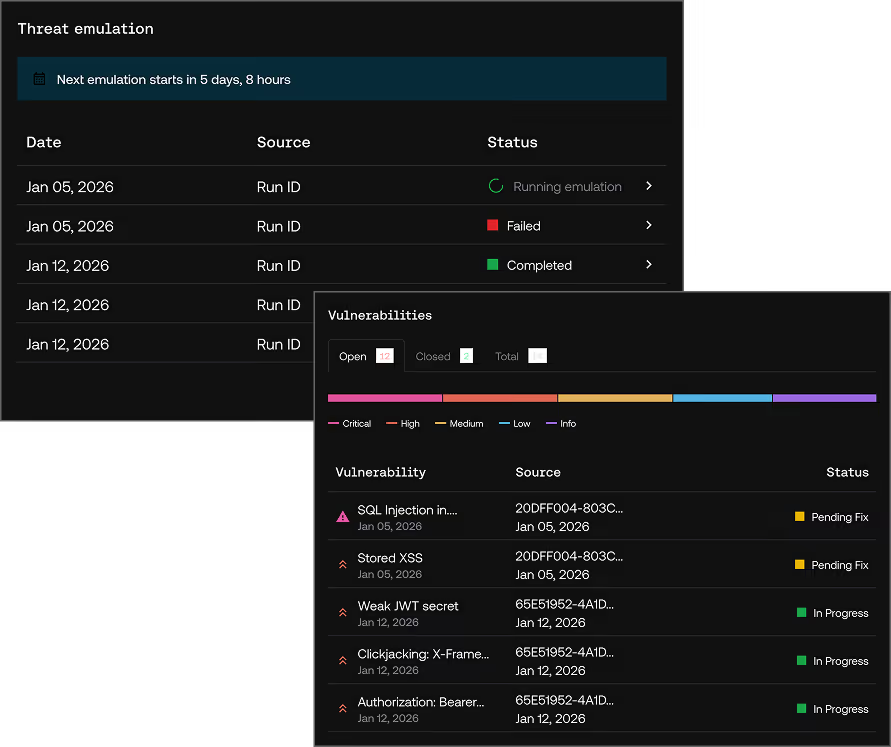
LGPD article 46 obliges data processing agents to adopt technical and administrative security measures capable of protecting personal data, and the Banco Central framework sets cybersecurity policy and testing expectations for regulated institutions. Strike's continuous pentesting produces the technical evidence those programs ask for — real vulnerabilities, validated by experts, with reports that support audit and compliance programs. Sources and access dates below.


For DPOs and security leaders answering to BACEN
DPOs and privacy leaders who must show LGPD article 46 security measures are real, tested, and backed by evidence — not just written into policy.
Security and compliance teams at regulated Brazilian institutions building cybersecurity programs that support Banco Central and CMN expectations.
Risk and audit leaders who need continuous, documented validation they can put in front of regulators, auditors, and the board with confidence.
What the rules ask for — and how a pentest answers
The LGPD and the Banco Central point to the same practice: test your systems continuously and prove the controls work. Continuous pentesting turns that into evidence that supports audit and compliance programs — real vulnerabilities, validated by experts, documented for your DPO, auditors and regulators.
LGPD (Art. 46): the Lei Geral de Proteção de Dados requires organizations to adopt technical and administrative measures that protect personal data from unauthorized access and incidents. Continuous pentesting validates those measures as your systems change and documents evidence for the ANPD.
Banco Central and CMN: Resolution CMN 4.893/2021, as amended by Resolution CMN 5.274/2025, sets cybersecurity policy expectations for supervised institutions, covering independent penetration testing, vulnerability management and incident response. Strike's continuous testing supports and strengthens that policy. See the sources below.
A pentest is not a compliance seal. It is the core technical evidence of a security program — proof that controls actually work. Strike does not certify compliance; it gives your auditors, DPO and regulators validated findings, remediation guidance and retest results.
Pentest for LGPD and BACEN, answered
Does the LGPD require a pentest?
The LGPD does not mandate a specific test, but Art. 46 requires appropriate security measures to protect personal data. Continuous penetration testing is a recognized way to validate those measures and to produce evidence that controls work if the ANPD or an auditor asks.
What does the Banco Central expect regarding penetration testing?
Resolution CMN 4.893/2021, as amended by Resolution CMN 5.274/2025, sets out cybersecurity policy and testing expectations for institutions supervised by the Banco Central do Brasil, including independent penetration testing, vulnerability management and incident response. Strike's continuous testing and reporting support those programs. See the sources and access dates below, and confirm the current obligations that apply to your institution with your own legal or compliance counsel.
Sources, accessed 29 July 2026. LGPD: Lei nº 13.709/2018, art. 46 (Planalto). Banco Central do Brasil, CMN cybersecurity rules: Resolution CMN 4.893, of 26 February 2021, as amended by Resolution CMN 5.274, of 18 December 2025. For payment institutions: Resolution BCB 85, of 8 April 2021, as amended by Resolution BCB 538, of 18 December 2025, and by Resolution BCB 552, of 3 March 2026. This page summarises publicly available regulation and is not legal advice; confirm the obligations applicable to your institution with your own counsel.
Does a Strike pentest work as audit evidence?
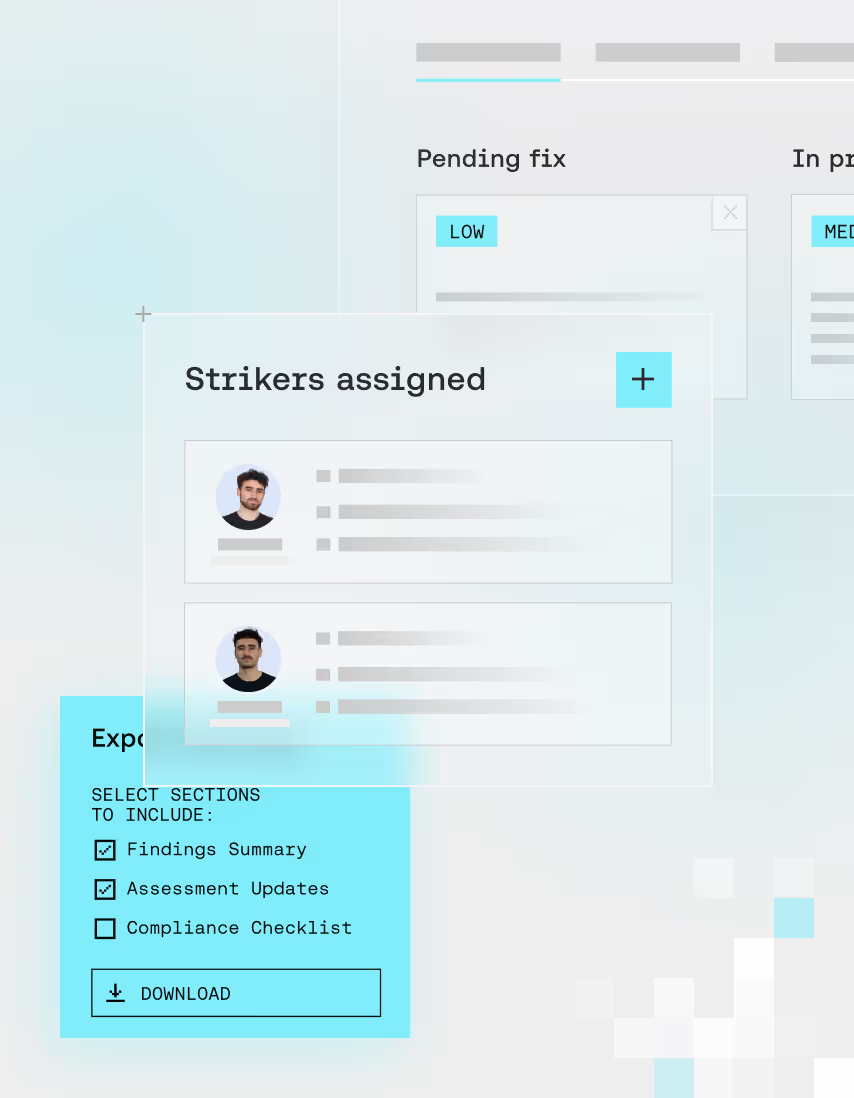
Yes. You get validated findings with proof of exploitation, clear remediation guidance, retest results according to the subscribed scope, and reports that support audit and compliance programs, which you can share with auditors, your DPO and regulators.
How often should we test for LGPD and Banco Central programs?
Resolution CMN 5.274/2025 brought intrusion testing explicitly into the framework of Resolution CMN 4.893/2021, alongside vulnerability management and incident response. Continuous testing is the stronger option: it validates security after every significant change and keeps your exposure window in days instead of months, with evidence that stays current.
What role does Strike play for LGPD and BACEN?
Strike does not certify compliance. Strike provides continuous testing with expert human validation and the documented evidence your auditors, DPO and regulators need to demonstrate that controls work.
How much does a pentest cost, and how is it contracted?
Strike works as a continuous subscription scoped to your attack surface rather than a one-off project, so cost follows scope. Onboarding is quick — connect your scope — so you can produce validated findings and evidence that supports audit programs before a deadline, and keep it current with continuous testing.
Trusted by security teams that lead






Human expertise.
AI power.
Superior security.
Whether you’re scaling fast, closing enterprise deals, or just tired of noisy reports, we’ll help you build a security stack that moves faster than your threats.
