
How to choose a penetration testing company
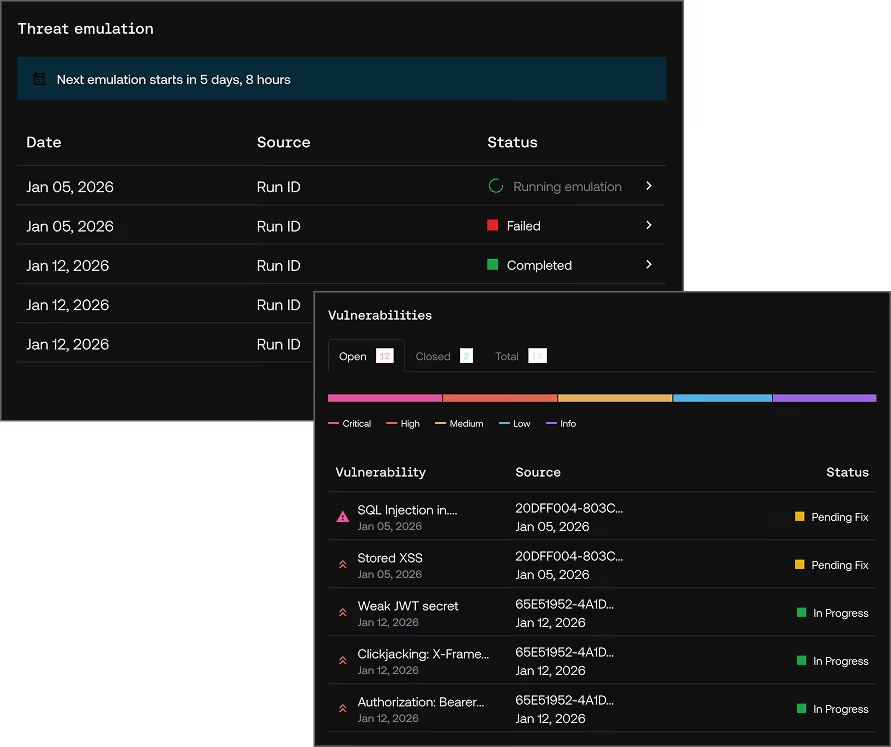
A penetration testing company is a provider whose testers manually attack your systems to prove which flaws are actually exploitable. Compare providers on eight things: who the testers are and how you verify it, the methodology they declare, whether retesting is included, time to first finding, evidence quality for auditors, point-in-time versus continuous coverage, SDLC integration, and what the price leaves out.

Who is this for?
Security leaders running an RFP who need a defensible way to separate providers that all promise the same outcome.
Teams whose last report turned out to be a scanner export with a cover page, and who now need evidence an auditor will accept.
Engineering organizations shipping every week, for whom a single annual engagement leaves eleven months untested.
Four ways to buy a penetration test, compared
Most penetration testing companies fall into one of four delivery models, and the model matters more than the logo. Before comparing vendors, compare the models: they differ in who actually tests, how often, how much triage lands on your team, and whether the output survives an audit.
Named vendor comparisons live on their own pages. This grid is about the delivery model, which is the decision you make first.
The eight-criteria evaluation framework
Frequently asked questions
How much do penetration testing companies charge?
There is no single market rate, because the price tracks the scope rather than the service name. The variables that move it most are the number and type of assets in scope, the depth of testing, the seniority of the testers, whether retesting is included, and whether the provider has to produce audit-grade evidence. Two quotes for the same application can differ several times over purely because one includes retesting and manual business-logic testing and the other does not.
What certifications should the testers hold?
The widely recognized hands-on credentials are OSCP from OffSec, GPEN from GIAC, and the CREST registered and certified tester tracks. CEH is common but is knowledge-based rather than practical. Certifications are a floor, not a ceiling: ask additionally for published research, CVEs or bug bounty history attached to the specific people who will test your systems.
How long does a penetration test take end to end?
For a traditional engagement, plan for scoping and scheduling before testing even starts, then a testing window, then report writing and a readout, and finally a retest once fixes ship. The calendar time is usually dominated by the queue and the report, not by the testing itself. Continuous models change the shape of this: testing starts once and findings arrive as they are validated, so the clock that matters becomes time to first validated finding.
Do I need a penetration testing company, or are scanning tools enough?
Scanners are good at finding known, signature-matched issues at scale and you should run them. They cannot find flaws that depend on understanding intent: broken authorization between two user roles, a business rule that can be skipped, a chain of three low findings that together reach your data. Those require a human attacker, and they are also the findings that turn into real incidents.
How do I verify that a report will hold up in an audit?
Ask for a redacted sample before you sign. An auditor generally wants to see the scope tested, the dates, the methodology, the identity or qualification of the testers, each finding with severity and evidence, and proof that issues were remediated and retested. A scanner export with a cover page usually fails that bar. Pentest evidence supports SOC 2 and ISO/IEC 27001 programs; it does not certify them.
What should I ask in a penetration testing RFP?
Ask who tests and what they are certified in; which methodology is followed; what the deliverables are and whether a sample is available; whether retesting is included and how many rounds; time to first finding and time to report; how new assets discovered mid-engagement are handled; how findings reach engineers; and an explicit list of what is out of scope. Ask every shortlisted provider the same set, in writing, so the answers are comparable.
Once you have picked a delivery model, the next step is comparing named providers and scoping the work.
Our solution architecture
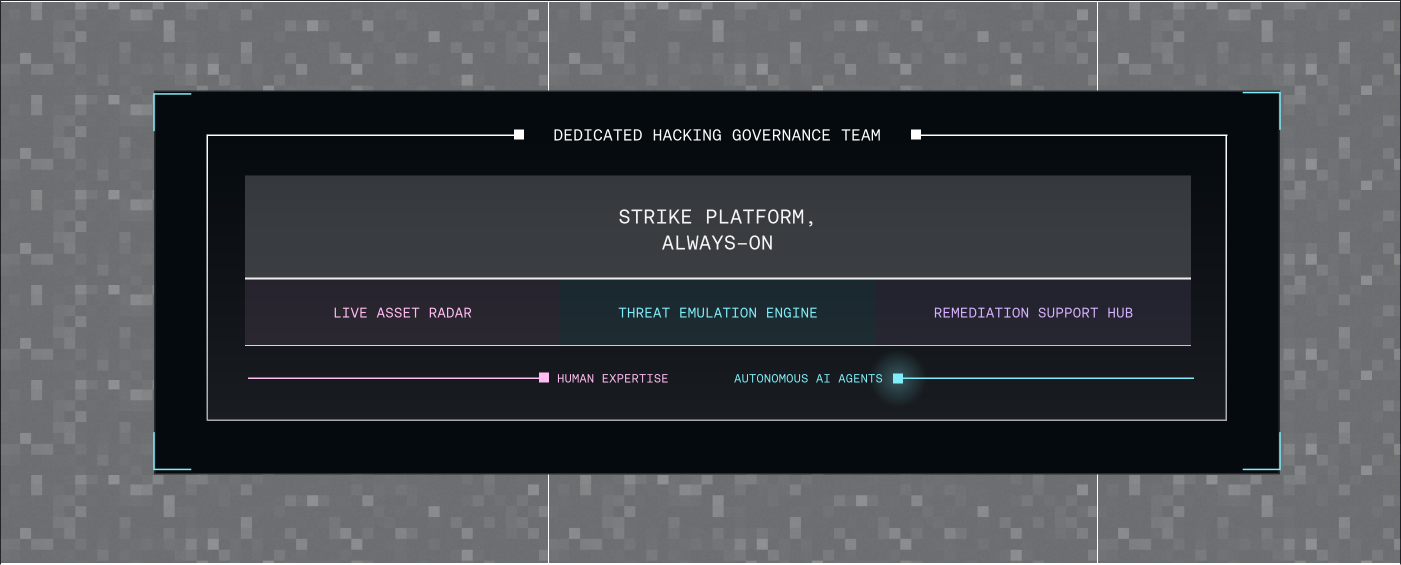
A centralized platform that combines continuous asset monitoring, autonomous threat emulation, and expert remediation support—powered by AI agents, human validation, and a dedicated governance team.
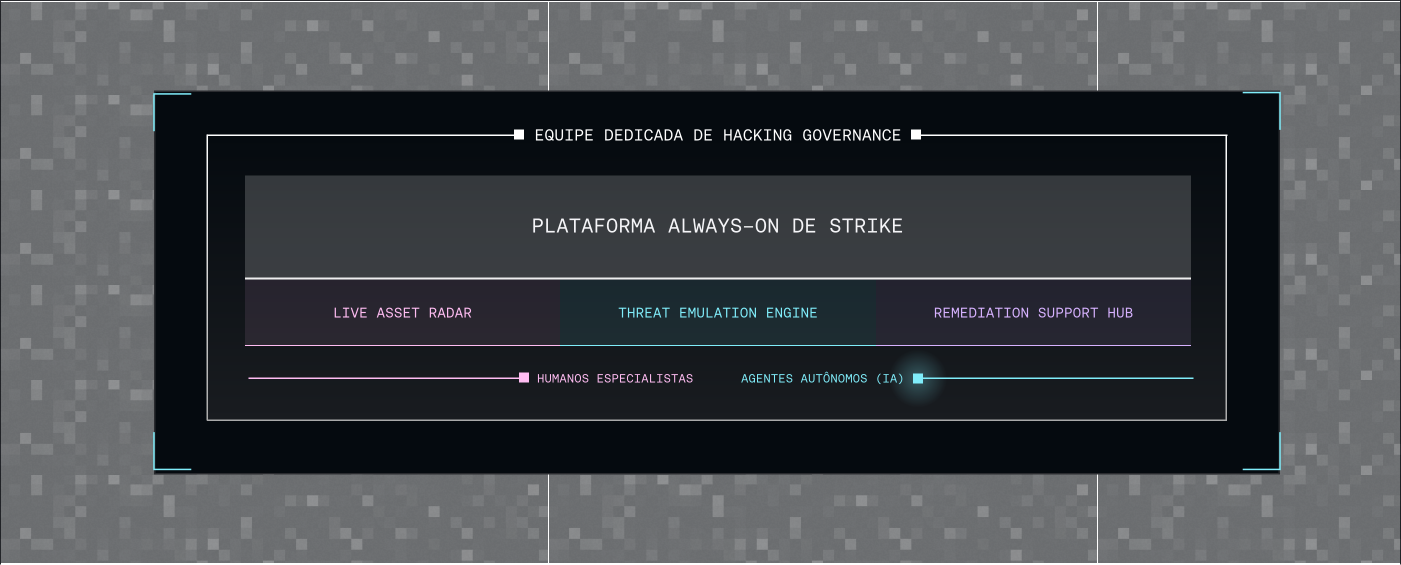
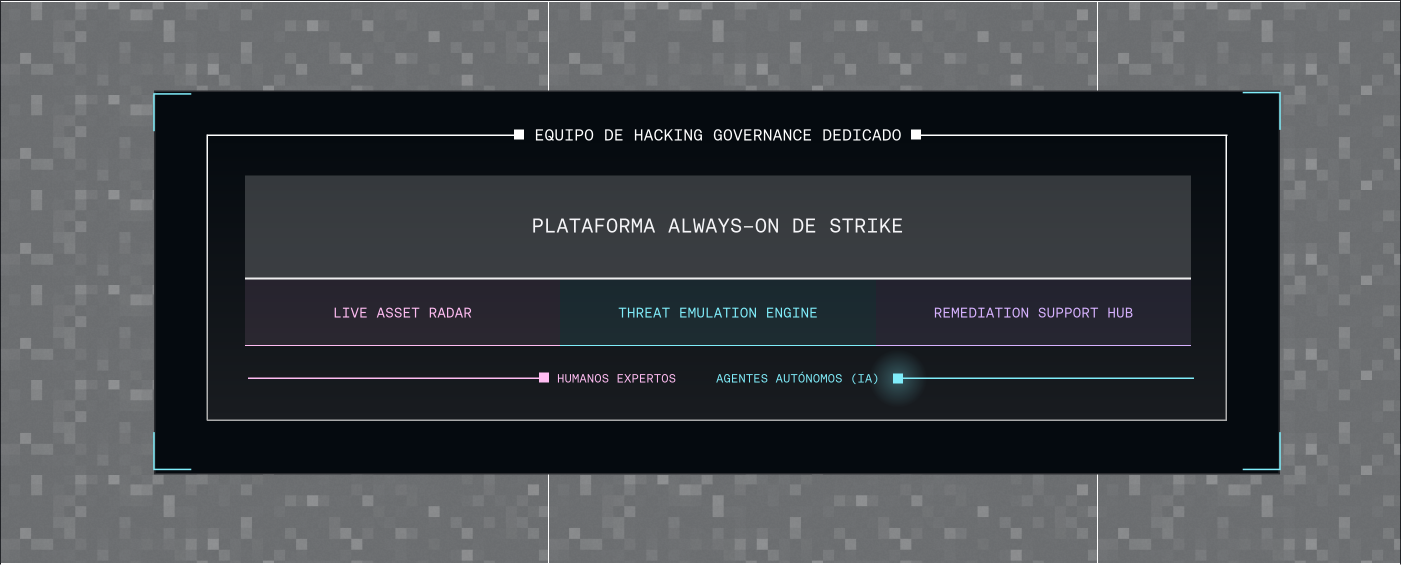
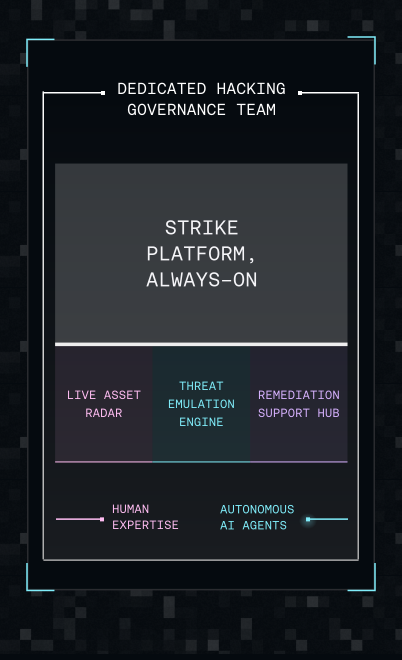
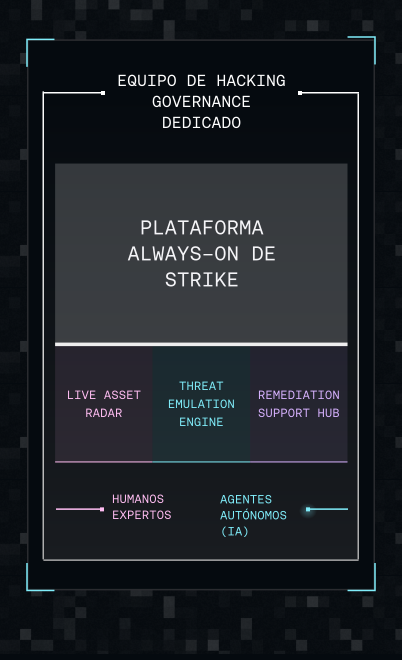
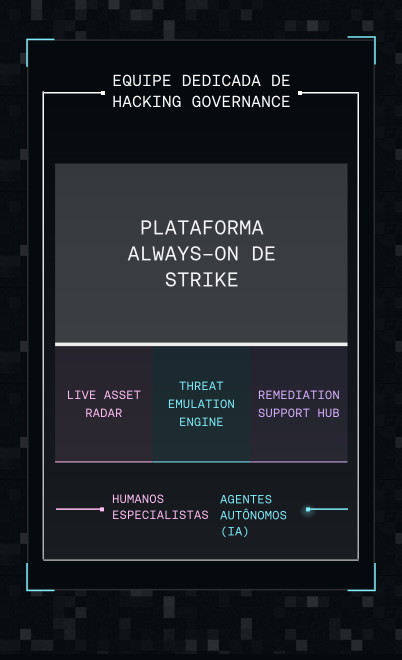
ALWAYS-ON PLATFORM
More than a test. A strategic layer for real security.
Our AI is powered by a proprietary data layer built from thousands of hours of pentesting and real-world validations. Strike combines autonomous execution and expert human validation to uncover complex risks, reduce noise, and prioritize actionable findings.

In-depth continuous testing
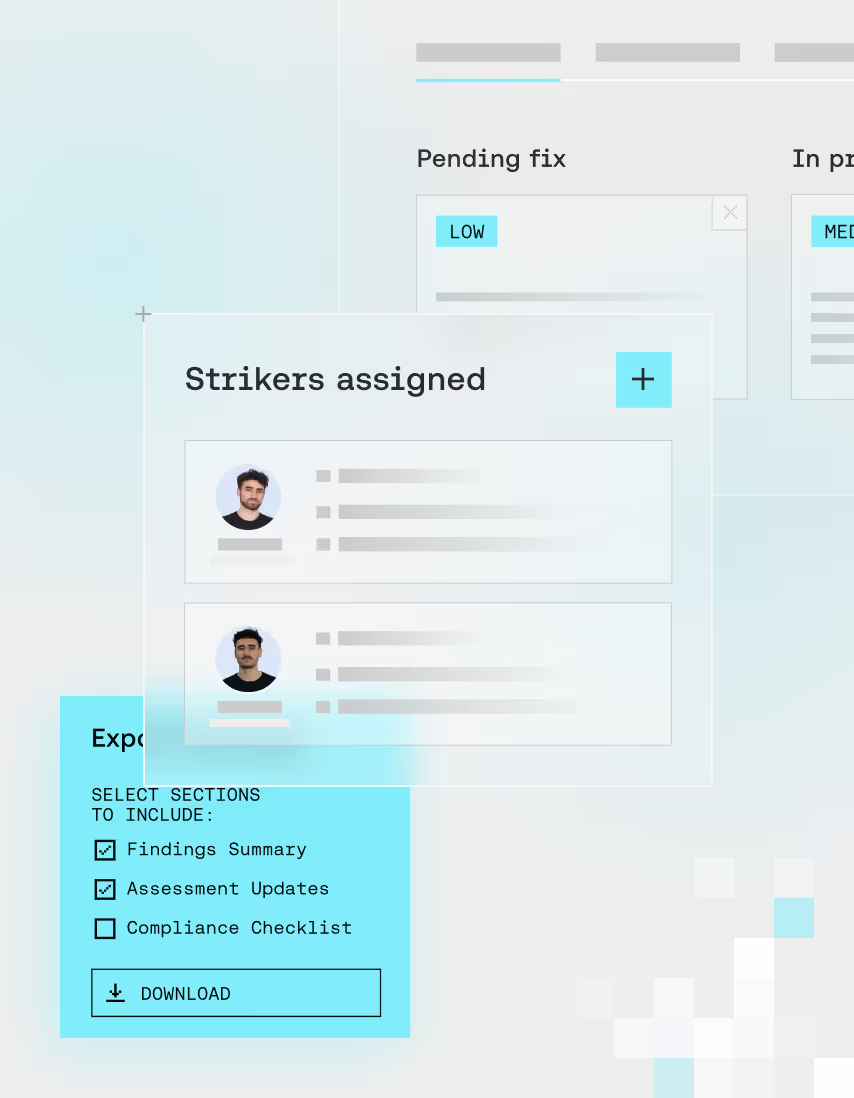
Strikers uncover high-impact vulnerabilities across multi-technology environments (web apps, APIs, mobile, cloud, and more).

AI-led retesting on-demand
Validate fixes instantly, without waiting for the next testing cycle.

Real-time fixing
AI agents guide your team step-by-step through remediation to accelerate resolution.

Step-by-step Threat emulation creation
Easily scope, launch, and track your Threat emulation with full transparency.

Human triaging & peer review
Every finding is validated by security experts to ensure accuracy and impact.

Full visibility
Track every finding with complete transparency through security expert work logs and real-time notifications.

Seamless integrations
Connect directly with Slack, Teams and Jira to streamline collaboration with your security and development teams.

Vulnerability Manager
Visualize, manage, and retest vulnerabilities in one platform, with full context on severity, sources, and remediation.

Compliance-ready reporting
Automatically generate up-to-date reports aligned with PCI DSS, HIPAA, ISO 27001, SOC 2, and more.

Ongoing partnership
Weekly check-ins with a dedicated Customer Success Manager, plus personalized onboarding and strategic planning.
More than an offensive security platform, Strike operates as a continuous validation layer for environments that never stop changing.

Trusted by security teams that lead






Human expertise.
AI power.
Superior security.
Whether you’re scaling fast, closing enterprise deals, or just tired of noisy reports, we’ll help you build a security stack that moves faster than your threats.
