
Continuous penetration testing for companies in Brazil
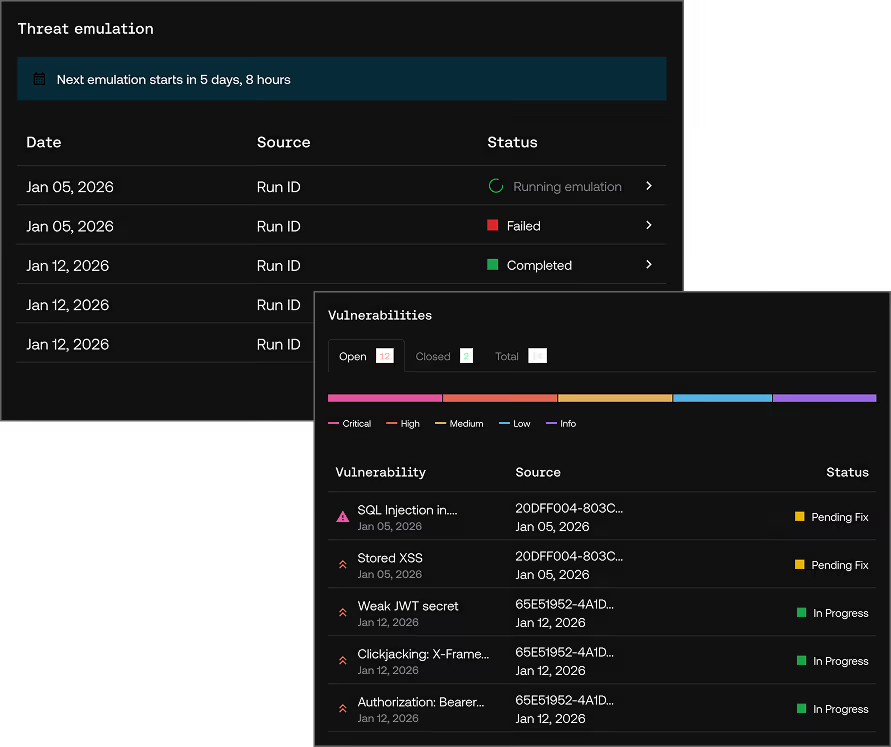
A penetration test (pentest) is a controlled simulation of a real attack that finds vulnerabilities before criminals exploit them. Strike runs continuous pentesting for companies in Brazil — combining AI with certified pentesters — at 97% accuracy, with audit-ready evidence for LGPD programs and Banco Central cybersecurity rules.


Designed for environments that never stop changing
Security teams that require real-time visibility into every digital asset and automated testing triggered by every change.
Organizations that need to detect and validate emerging risks as they appear — not weeks after a point-in-time assessment.
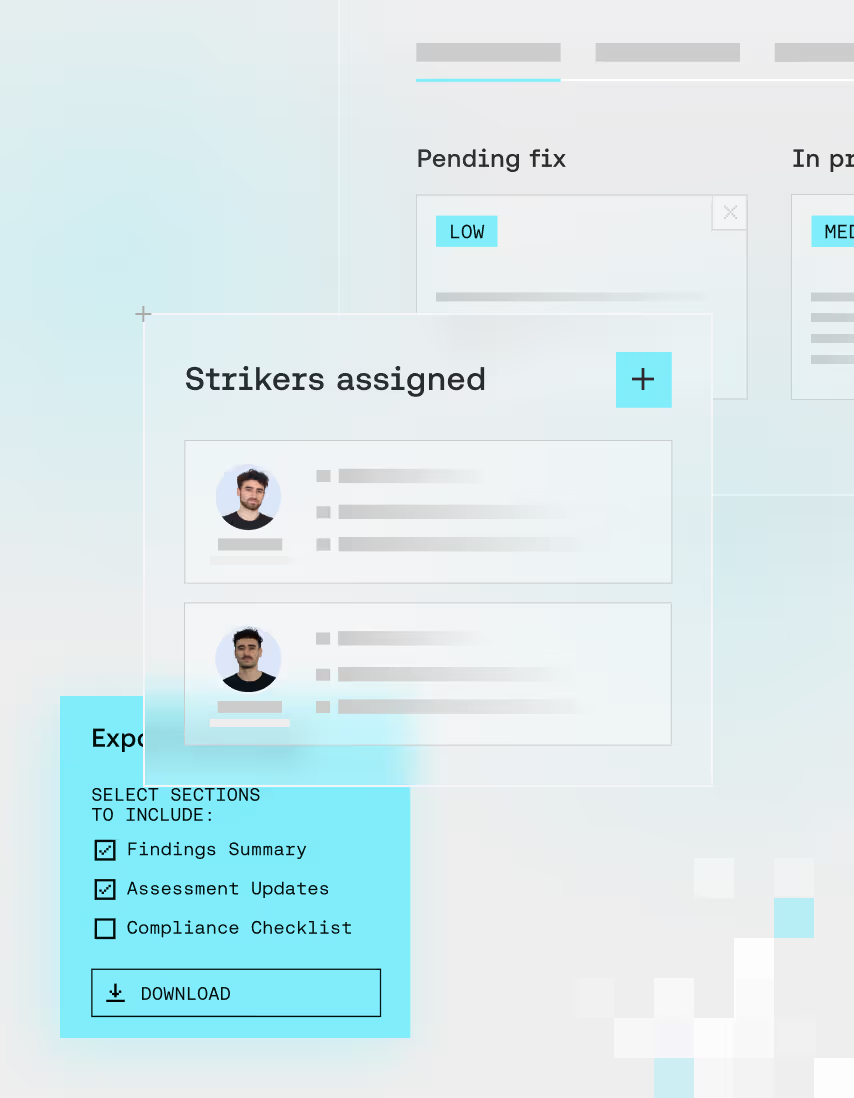
Enterprises looking to accelerate remediation through guided workflows, real-time retesting, and audit-ready findings within a unified platform.
Pentest for the Brazilian context: Pix, LGPD, Banco Central
Brazil runs one of the world's most advanced payment ecosystems — Pix, open finance and a fast-growing fintech sector — on stacks that change every day. Institutions supervised by the Banco Central and companies handling personal data under the LGPD are expected to test continuously, not once a year.
Banco Central and CMN cybersecurity rules: Resolution CMN 4,893/2021, updated by Resolution CMN 5,274/2025, requires supervised institutions to run at least annual independent penetration tests, keep the results for five years, and monitor cyber threats. Strike's continuous testing supports and goes beyond that baseline.
LGPD (Art. 46): the Lei Geral de Proteção de Dados requires appropriate technical measures to protect personal data. Continuous pentesting produces the evidence that those controls work — useful for the ANPD and for internal audits.
Pix, open finance and APIs: instant payments and open finance widen the API attack surface. Strike focuses on the API, authentication and payment-flow flaws that attackers target, validated by expert hackers.
Pentest in Brazil, answered
What is a pentest and why does my company need one?
A pentest (penetration test) is a controlled simulation of a real attack that finds and proves exploitable vulnerabilities before criminals do. Companies in Brazil need it because attackers target Pix, APIs and financial data constantly, and regulators expect evidence that security controls actually work — not just that they exist.
How much does a pentest cost in Brazil?
Strike works as a continuous subscription scoped to your attack surface rather than a one-off fixed-price project, so cost depends on the scope and assets in scope. That model gives you continuous coverage and on-demand retesting instead of a single annual report. Contact us for a scoped quote.
Is a pentest mandatory for LGPD or the Banco Central?
For institutions supervised by the Banco Central, the CMN cybersecurity rules require at least annual independent penetration testing and vulnerability management. The LGPD does not name pentesting explicitly, but Art. 46 requires appropriate security measures that continuous pentesting helps demonstrate. Strike supports both; it does not issue certifications.
What is the difference between a pentest and a vulnerability scan?
A scanner lists potential issues automatically and generates noise; a pentest exploits and validates real vulnerabilities, including business-logic and chained attacks a scanner misses. Strike combines automated coverage with expert human validation, keeping false positives under 3%.
How often should we run a pentest?
The Banco Central baseline is at least annual, but financial platforms ship constantly and every release adds exposure. Continuous pentesting tests as you change and lets you retest on demand, keeping your exposure window in days instead of months.
Does Strike serve regulated companies in Brazil?
Yes. Strike works with banks, fintechs and payment providers in Brazil and across Latin America, with Portuguese-speaking support and published customer stories on our success cases page.
Trusted by security teams that lead






Human expertise.
AI power.
Superior security.
Whether you’re scaling fast, closing enterprise deals, or just tired of noisy reports, we’ll help you build a security stack that moves faster than your threats.
