
Continuous penetration testing for LGPD and Banco Central programs
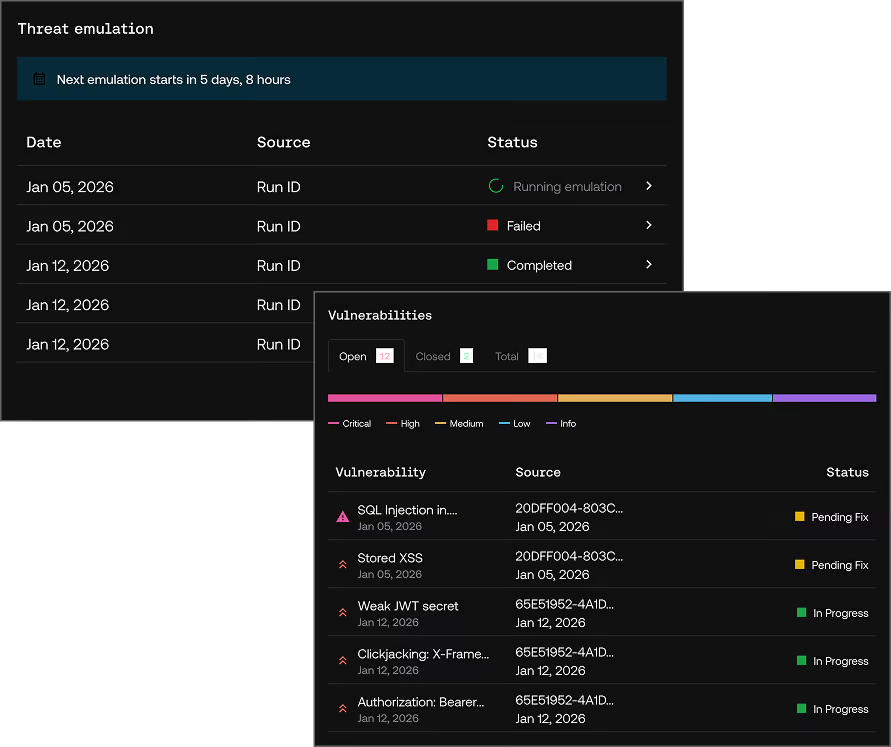
The LGPD requires technical measures capable of protecting personal data, and the Banco Central requires a cybersecurity policy and testing for regulated institutions. Strike's continuous pentesting produces the technical evidence those programs ask for — real vulnerabilities, validated by experts, with audit-ready reports.


Designed for environments that never stop changing
Security teams that require real-time visibility into every digital asset and automated testing triggered by every change.
Organizations that need to detect and validate emerging risks as they appear — not weeks after a point-in-time assessment.
Enterprises looking to accelerate remediation through guided workflows, real-time retesting, and audit-ready findings within a unified platform.
What the rules ask for — and how a pentest answers
The LGPD and the Banco Central point to the same practice: test your systems continuously and prove the controls work. Continuous pentesting turns that requirement into audit-ready evidence — real vulnerabilities, validated by experts, documented for your DPO, auditors and regulators.
LGPD (Art. 46): the Lei Geral de Proteção de Dados requires organizations to adopt technical and administrative measures that protect personal data from unauthorized access and incidents. Continuous pentesting validates those measures as your systems change and documents evidence for the ANPD.
Banco Central and CMN: supervised institutions must maintain a cybersecurity policy that includes at least annual independent penetration testing, vulnerability management and incident response (Resolution CMN 4,893/2021, updated by 5,274/2025). Strike's continuous testing supports and strengthens that policy.
A pentest is not a compliance seal. It is the core technical evidence of a security program — proof that controls actually work. Strike does not certify compliance; it gives your auditors, DPO and regulators validated findings, remediation guidance and retest results.
Pentest for LGPD and BACEN, answered
Does the LGPD require a pentest?
The LGPD does not mandate a specific test, but Art. 46 requires appropriate security measures to protect personal data. Continuous penetration testing is a recognized way to validate those measures and to produce evidence that controls work if the ANPD or an auditor asks.
What does the Banco Central expect regarding penetration testing?
Institutions supervised by the Banco Central must maintain a cybersecurity policy that includes at least annual independent penetration testing, vulnerability management and incident response (Resolution CMN 4,893/2021, updated by 5,274/2025). Strike's continuous testing and audit-ready reporting support those requirements.
Does a Strike pentest work as audit evidence?
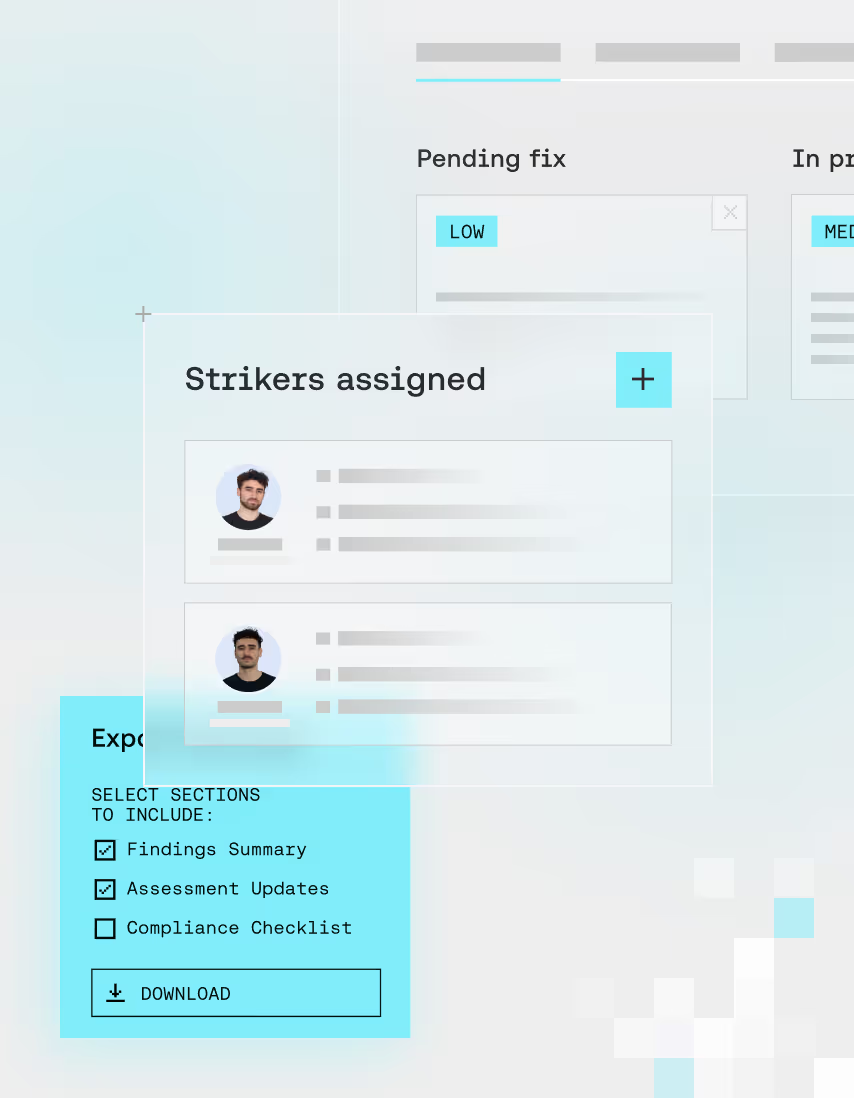
Yes. You get validated findings with proof of exploitation, clear remediation guidance, on-demand retest results and compliance-ready reports you can share with auditors, your DPO and regulators.
How often should we test for LGPD and Banco Central programs?
The Banco Central baseline is at least annual, but continuous testing is stronger: it validates security after every significant change and keeps your exposure window in days instead of months, with evidence that stays current.
Does Strike certify LGPD or Banco Central compliance?
No. Strike does not certify compliance. Strike provides continuous, expert-validated testing and the documented evidence your auditors, DPO and regulators need to demonstrate that controls work.
How fast can we start before an audit?
Onboarding is quick: connect your scope and testing begins in days, so you can generate validated findings and audit-ready evidence ahead of a deadline, then keep it current with continuous testing.
Trusted by security teams that lead






Human expertise.
AI power.
Superior security.
Whether you’re scaling fast, closing enterprise deals, or just tired of noisy reports, we’ll help you build a security stack that moves faster than your threats.
