
Strike vs Intruder: scanning or penetration testing?
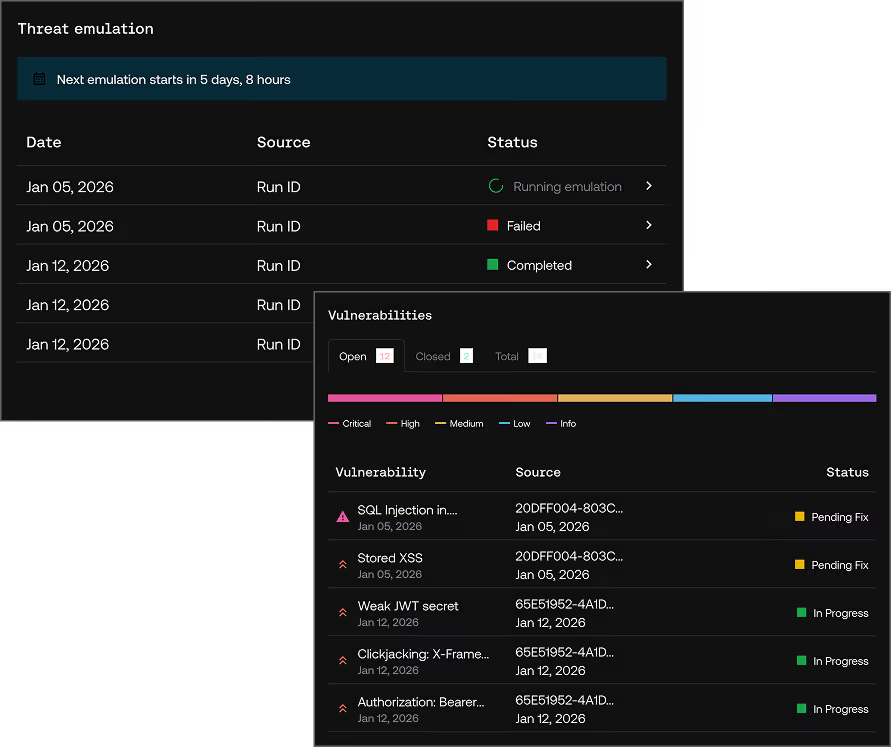
Intruder is a continuous vulnerability scanner and attack surface management platform, with AI-powered web application pentests sold separately from $3,500 per test. Strike is a continuous penetration testing service where AI executes and expert hackers validate every finding. If you need to know what is exposed and when it changes, Intruder is built for that. Proving what is exploitable is a different job.

Who ends up comparing these two
Teams who bought a scanner, watched the findings queue grow, and realised nobody could say which of them an attacker could actually use.
Companies whose auditor asked for a penetration test and would not accept a scan report in its place.
Multi-tenant products where the finding that matters most — one customer reaching another's data — returns a perfectly valid response to a scanner.
Finding what is exposed, versus proving what is exploitable
These two products get compared because both run continuously against your external surface, but they answer different questions. Intruder answers "what do we have exposed, and did it change?" — and it answers it well, with published pricing and a free tier. Strike answers "which of these can an attacker actually use, and what do they reach through it?" That second question needs exploitation, and exploitation needs a tester.
You want a free or low-cost entry point. Intruder publishes a perpetual free plan and transparent tiers. For a small team that mainly needs to know when something exposed changes, that is genuinely hard to beat, and we would not pretend otherwise.
Your problem is visibility, not exploitation. Knowing what you have exposed and being told when it changes is a real and separate problem. A scanner with good attack surface management is the correct tool for it — not a pentest.
You need self-serve, published pricing. You can budget Intruder without talking to a salesperson. If procurement speed matters more than testing depth right now, that is a legitimate reason to start there.
A scanner cannot tell you the record belongs to the wrong customer. Object-level authorisation flaws return a perfectly valid response with perfectly valid data. Finding them takes a tester who knows which account owns which record.
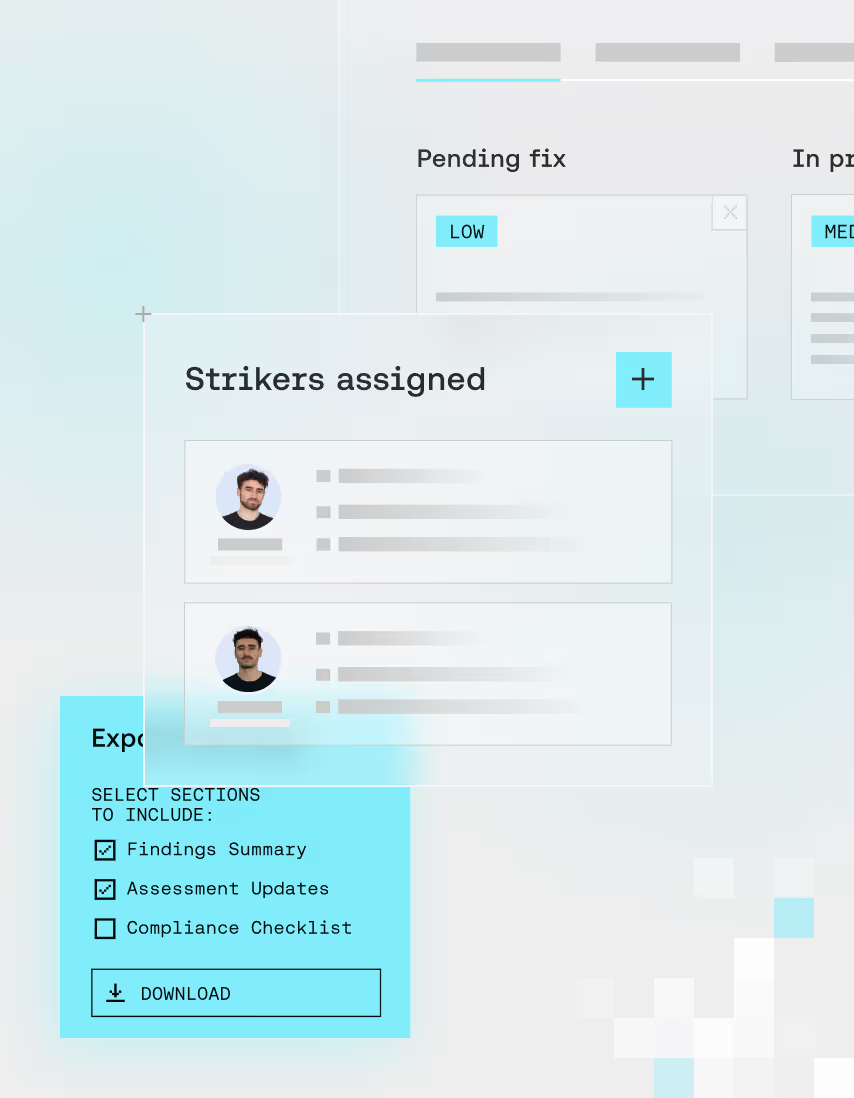
Findings arrive proven, not probable. Every Strike finding is validated by an expert hacker before it reaches your team, at 97% precision and under 3% false positives — so your engineers spend their time fixing rather than triaging.
Testing is included, not per test. Manual testing sold from $3,500 per test is a decision every single time. Continuous testing inside a subscription is not, and it is 15–30× more efficient than anything else in the industry.
You need audit-ready evidence. Dated reports and documented retests supporting SOC 2, ISO 27001 and PCI DSS — a scan report is rarely what the auditor is asking for.
Strike vs Intruder, answered
Is Strike an Intruder alternative?
Only partly, and it is worth being precise. Intruder is primarily automated scanning and attack surface management; Strike is penetration testing with human validation. Teams often keep a scanner for breadth and add Strike for depth.
Can a scanner replace a penetration test?
For compliance evidence, generally no — auditors distinguish between scanning and testing, and the criteria that reference testing expect exploitation to have been attempted. For finding business-logic and authorisation flaws, definitively no.
Do we still need continuous scanning if we have Strike?
Strike's continuous discovery covers change detection across your surface, so many teams consolidate. If you already have a scanner you like, keeping it costs you little and the two overlap harmlessly.
How does the pricing compare?
Intruder publishes tiers plus pentests from $3,500 per test; Strike is a subscription scoped to your attack surface. Compare total annual cost for the same coverage, including how many manual tests you would realistically buy across a year.
Can we migrate mid-contract?
Yes. Nothing sits inline, so onboarding is scoping plus access and takes under five minutes. You can overlap for a cycle and compare on real findings.
All Intruder claims above are quoted from Intruder's own public materials: intruder.io pricing page — consulted 24 July 2026.
Where a row reads "not published" or "not stated publicly", it means we could not find the figure in Intruder's public materials on that date — not that the capability is absent. Strike's own figures are defined on our methodology page.
Trusted by security teams that lead






Human expertise.
AI power.
Superior security.
Whether you’re scaling fast, closing enterprise deals, or just tired of noisy reports, we’ll help you build a security stack that moves faster than your threats.
