
Web application penetration testing, continuous and confirmed by expert human validation
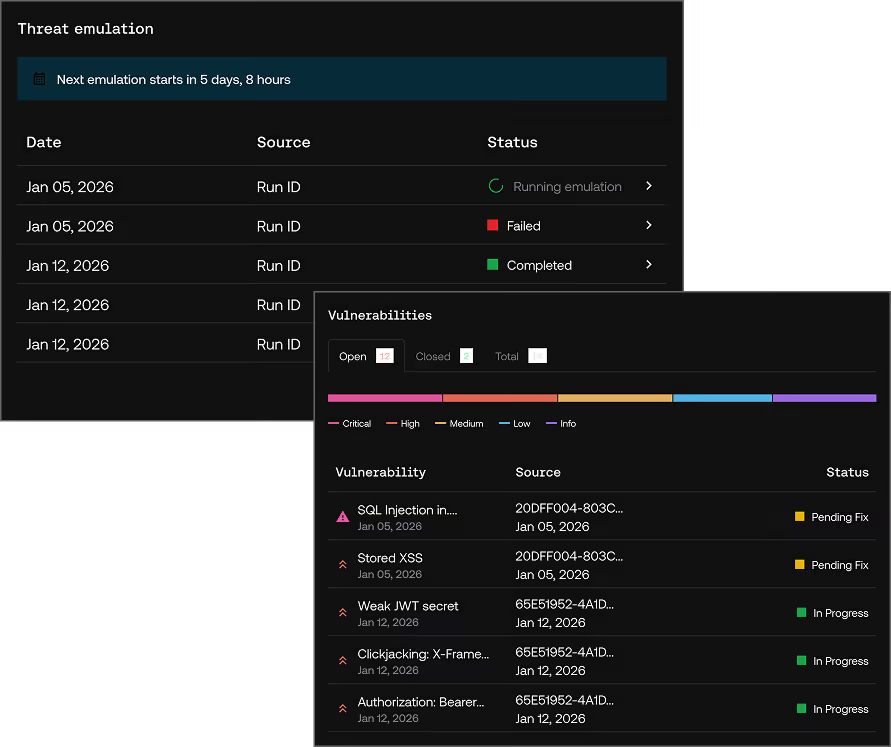
Web application penetration testing simulates real attacks against your web apps to find exploitable vulnerabilities — broken access control, injection, authentication failures and business-logic flaws — before an attacker does. Strike tests continuously with AI-led execution and expert human validation at 97% precision, so every finding you receive is real and proven.

Built for applications that ship every week
Product teams releasing continuously, where a test scoped in January describes an application that no longer exists in March.
Engineering leads who need business-logic and access-control flaws found, not another scanner report full of noise to triage.
Multi-tenant SaaS platforms where the worst possible finding is one customer reaching another customer's data.
What web application penetration testing actually covers
A web application pentest is not a scan with a nicer report. It is a person, or in Strike's case an AI agent supervised by expert hackers, treating your application the way an attacker would: reading how it behaves, working out what it assumes about its users, and then breaking those assumptions. Tooling finds known vulnerability classes. Testing finds the ones that only exist because of how your product works.
The OWASP Top 10:2025 is the current edition and the eighth of the series. Broken Access Control still sits at A01, followed by Security Misconfiguration, Software Supply Chain Failures, Cryptographic Failures and Injection, with Insecure Design, Authentication Failures, Software or Data Integrity Failures, Security Logging and Alerting Failures, and Mishandling of Exceptional Conditions completing the list.
Those categories are how findings get classified, not how they get discovered. Two applications with an identical Broken Access Control finding can be one forgotten admin route apart or one full tenant-data breach apart. The category tells you the shape of the problem; only testing tells you what it is worth to an attacker in your specific product.
Business logic. A checkout that accepts a negative quantity, a refund flow that can be replayed, a discount code that stacks with itself, a multi-step wizard whose third step can be called directly with the first two skipped. There is no signature for any of that — the requests are all perfectly well-formed, and the application is behaving exactly as it was written to behave.
Broken object-level authorisation — IDOR and its API cousin BOLA. Changing an identifier in a request and receiving somebody else's record is the single most common serious finding in modern applications, and automated tools miss it constantly because the response looks like a completely valid 200 with completely valid data in it. Only a tester who knows which account owns which record can tell that something went wrong.
Chaining. Individually a verbose error message, a predictable identifier and a rate limit that resets on a new session are all low-severity notes. Chained together they enumerate every user in your database. Scanners score findings one at a time; attackers do not.
Most of what is called a web app today is a JavaScript front end talking to an API, and the security boundary lives entirely in that API. Strike tests the app the way it is actually built — authenticated flows through single-page front ends, the REST and GraphQL endpoints behind them, the mobile clients that hit the same backend, and the roles and tenants that are supposed to keep customers apart.
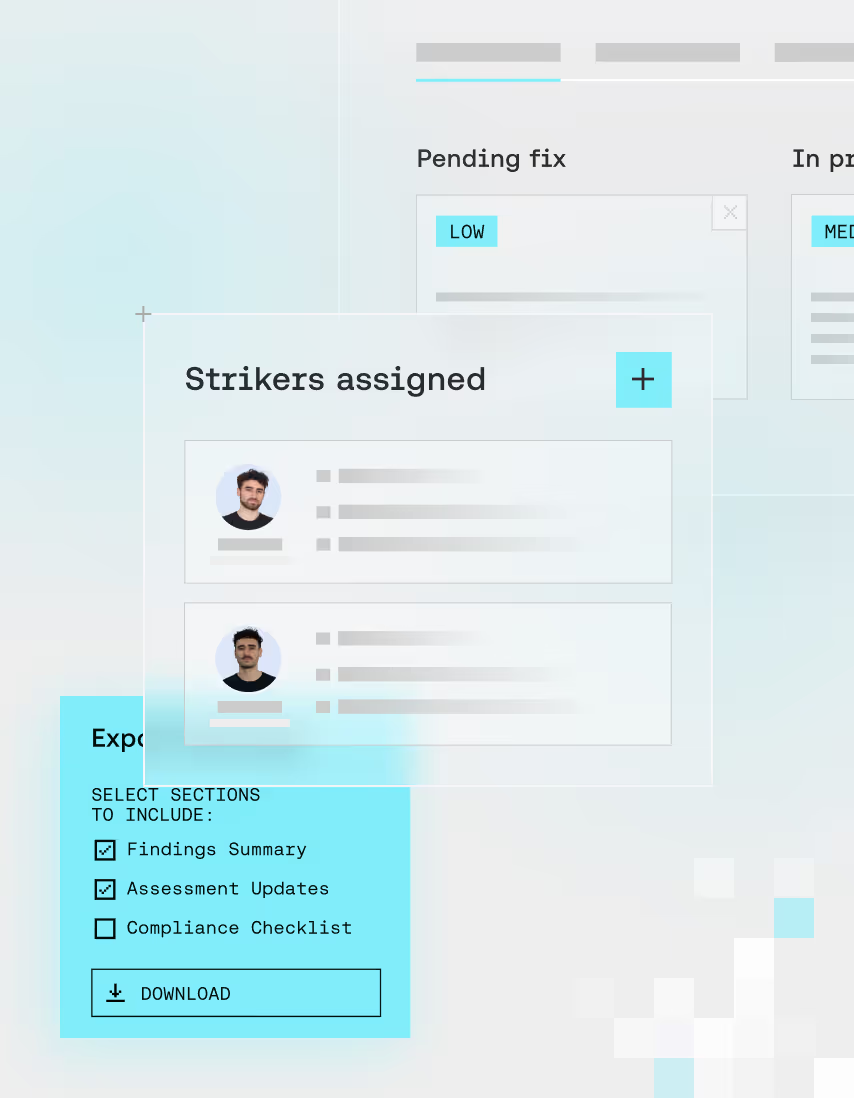
A web application that ships weekly is a different application every quarter. A test scheduled once a year describes a version of your product that no longer exists by the time the report is read. Strike runs continuously and triggers on change, so a new endpoint gets tested when it ships rather than eleven months later — and every fix gets a documented retest attached to the finding it closes.
Web application penetration testing, answered
What is web application penetration testing?
A controlled simulation of a real attack against your web application, run by security experts rather than by a tool alone. The goal is not a list of theoretical weaknesses but proof: which vulnerabilities can actually be exploited, what an attacker reaches through them, and what it would cost you.
Which vulnerabilities does it find?
Everything in the OWASP Top 10:2025 — broken access control, security misconfiguration, supply chain failures, cryptographic failures, injection, insecure design, authentication failures and the rest — plus the flaws that never appear on any list because they are specific to your product: business-logic abuse, privilege escalation between roles, and data leakage between tenants.
How is this different from a DAST scanner?
A scanner sends known payloads and matches known patterns, which makes it good at breadth and useless at context. It cannot tell that an endpoint returning a valid record is returning the wrong customer's record. Penetration testing understands intent, chains findings together and validates exploitability. Strike runs both: automated breadth with expert validation on top.
Do you test SPAs, APIs and mobile backends?
Yes. Single-page applications, REST and GraphQL APIs, and the backends behind mobile clients are all in scope, including authenticated flows and multi-role, multi-tenant scenarios. In most modern products the API is where the real risk lives, so that is where most of the testing effort goes.
How often should a web application be tested?
As often as it changes. For a product shipping weekly, an annual test covers a fraction of what actually reached production. Strike tests continuously and triggers on change, so new functionality is covered as it ships instead of waiting for the next scheduled engagement.
How is cost and scope defined?
Scope is defined by the applications, domains and APIs you want covered, and pricing follows that scope as a continuous subscription rather than a one-off project fee. Setup takes under 5 minutes once the target information and access are ready, and initial findings typically arrive within 1–2 hours of testing beginning, for supported scopes. Contact us for a scoped quote.
Trusted by security teams that lead






Human expertise.
AI power.
Superior security.
Whether you’re scaling fast, closing enterprise deals, or just tired of noisy reports, we’ll help you build a security stack that moves faster than your threats.
