
On November 9, 2026, Anthropic introduced Claude Fable 5.2 and Claude Mythos 5.2, its new AI models designed to tackle complex technical tasks, from software engineering to scientific research and cybersecurity.
The company announced improvements in coding, reasoning, and visual understanding, along with output generation speeds up to 30% faster than the previous 5.1 versions.
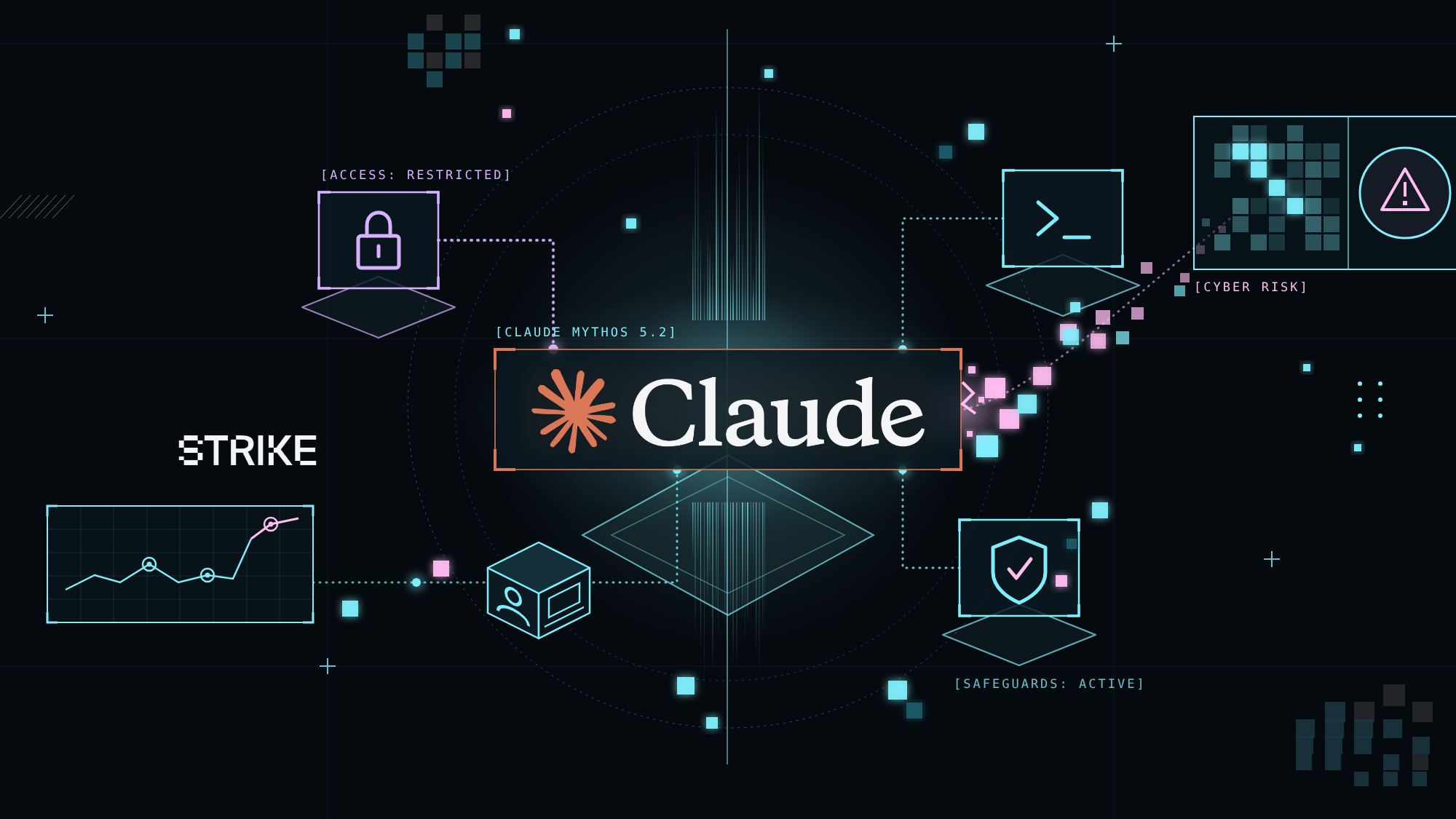
But one detail of the launch deserves particular attention: Fable 5.2 and Mythos 5.2 share the same underlying model, yet not all users have access to the same capabilities.
While Fable is commercially available, access to Mythos's advanced cybersecurity capabilities is subject to verification. This decision reflects an increasingly important challenge for the industry: how to make powerful AI models available for advanced technical research without also enabling malicious use.
Claude Fable 5.2 and Mythos 5.2: one model, different access conditions
According to Anthropic, both models were developed to collaborate on projects requiring complex reasoning, programming, and long-running technical tasks.
During pre-release testing, the company reported that its models helped complete complex software migrations, design electronic devices, and solve advanced scientific research problems.
Anthropic also reported performance improvements. In its internal CVE Rediscovery evaluation, which measures the ability to identify known vulnerabilities in software versions released before those vulnerabilities were patched, Mythos 5.2 discovered 10.2% more vulnerabilities than Claude Opus 5.5 and 14.4% more than Mythos 5.1.
The evaluation covered 1,829 documented vulnerabilities and showed improvements across different effort levels. However, these results come from Anthropic's internal testing and should not be interpreted as a universal measure of the model's performance in real-world environments.
The most interesting difference between Fable and Mythos, however, goes beyond their technical capabilities.
It lies in the controls that determine which tasks they can perform and who can access them.
Fable 5.2 includes safeguards designed to restrict requests considered high-risk in areas such as cybersecurity and biology. Mythos 5.2, on the other hand, provides access to certain advanced capabilities through verification programs.
Security professionals and organizations can apply for access to these capabilities through Anthropic's Cyber Verification Program.
Why is Anthropic restricting access to advanced cybersecurity capabilities?
Vulnerability research is a clear example of the dual-use nature of artificial intelligence.
The same capabilities that allow a model to analyze code, identify weaknesses, or develop proof-of-concept exploits can be used either to strengthen systems or to compromise them.
The difference does not necessarily lie in the technique itself, but in the context, authorization, and purpose behind its use.
A model capable of identifying a complex vulnerability can help a security team uncover a risk before attackers exploit it. But that same capability could also lower the technical barriers for malicious actors.
As AI models improve in coding, reasoning, and tool use, this tension becomes increasingly significant.
Rather than blocking all advanced cybersecurity capabilities, Anthropic has chosen to enable certain uses through verification programs while maintaining restrictions on general access.
The Cyber Verification Program, expanded in October 2026, includes three access tiers:
- Defense Access: Designed for defensive tasks such as incident response, malware analysis, and vulnerability validation.
- Red Team Access: Enables authorized penetration testing and red teaming exercises, subject to additional verification requirements.
- Specialized Access: Reserved for verified organizations conducting security testing on particularly sensitive systems, including critical infrastructure.
Each tier establishes different requirements and security controls based on the type of research being conducted.
This approach aims to support defensive security teams without making potentially harmful capabilities broadly available.
It also raises an important point: access to advanced AI models is becoming part of AI developers' own security strategies.
From discovering vulnerabilities to investigating exploitability
The evolution of these models has implications that go far beyond code generation.
In cybersecurity, one of their most promising applications is accelerating research-intensive tasks: analyzing software components, identifying unexpected behavior, developing hypotheses about potential vulnerabilities, and creating tests to verify them.
Anthropic's progress in this area did not begin with Mythos 5.2.
Through Project Glasswing and its Cyber Verification Program, the company had already been working with external organizations to explore how advanced AI models could contribute to vulnerability discovery and analysis.
According to results published by Anthropic, Project Glasswing participants identified at least 129,000 verified software vulnerabilities between April and July 2026, using models from the Mythos family.
Importantly, these findings came from earlier initiatives and should not be attributed exclusively to the new Mythos 5.2.
The latest release builds on that research, combining improvements in the model's general capabilities with differentiated access conditions.
However, there is an important distinction between discovering a potential vulnerability and demonstrating its impact.
An AI-generated finding may require additional validation to determine whether it is exploitable, under what conditions exploitation is possible, and what consequences it could have in a real environment.
It is also essential to distinguish results obtained in controlled evaluations from a model's performance in production systems, where specific configurations, security controls, and dependencies can affect outcomes.
Faster AI-powered research does not mean every finding carries the same impact or can be exploited in every environment.
What changes for security teams?
More capable AI models could expand the number of investigations and security tests teams can perform within a given period.
But they also introduce new challenges.
The first is validation. As the ability to identify potential vulnerabilities increases, determining which findings represent real risks and which require further investigation becomes even more important.
The second is prioritization. Organizations may receive numerous findings, but their remediation resources remain limited. Technical severity, exploitability, and asset criticality must be considered together when deciding what to address first.
The third is oversight. Automation can accelerate research and testing, but offensive security assessments on real systems require authorization, operational boundaries, and appropriate safeguards.
In this context, human expertise remains essential for interpreting results, evaluating complex scenarios, and making decisions about the scope and potential consequences of a test.
For organizations, the challenge is not simply adopting more powerful AI tools. It is integrating them into security processes that can turn their findings into concrete actions.
Offensive security is entering a new phase
The launch of Claude Mythos 5.2 reflects a trend that is reshaping cybersecurity research: AI models are developing increasingly advanced capabilities for analyzing software and solving complex technical problems.
At the same time, Anthropic recognizes that these capabilities require different access conditions from those applied to general-purpose tools.
This opens a debate that will likely continue to grow: how can security researchers and teams benefit from AI advances without unnecessarily expanding opportunities for misuse?
For organizations, there is a practical implication.
As vulnerability discovery accelerates, having processes in place to validate findings, assess their impact, and remediate them promptly becomes increasingly important.
The next phase of offensive security will depend not only on how much AI can discover, but on how effectively we can turn those discoveries into measurable security improvements.
Sources and further reading
- Anthropic — Introducing Claude Fable 5.2 and Claude Mythos 5.2
- Anthropic — Expanding the Cyber Verification Program
- Anthropic — Claude Mythos: models, availability, and access programs