Ekoparty 2026: Everything That Happened at Strike Hacking Lab
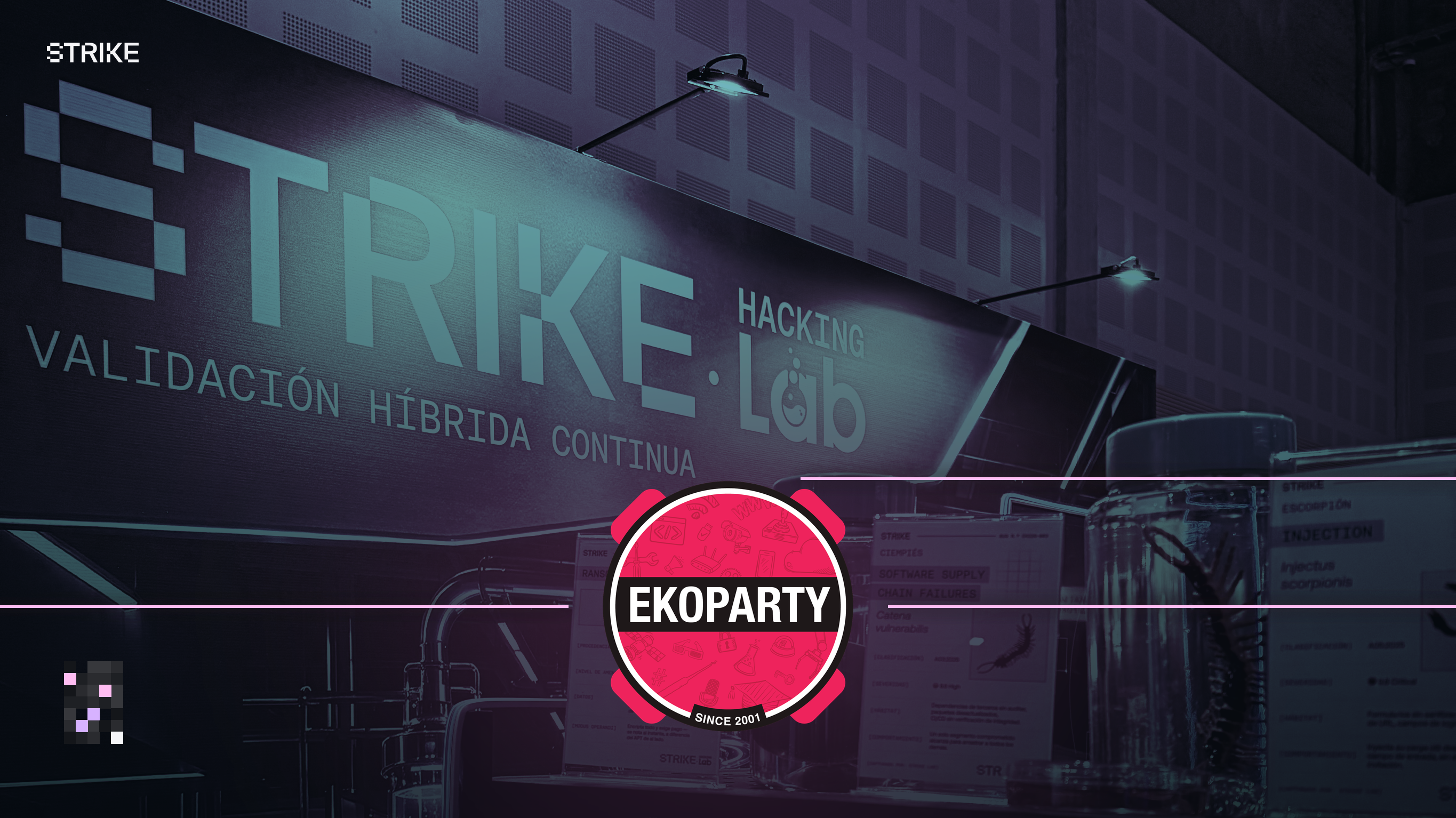
From October 7 to 9, we transformed our space at Ekoparty Buenos Aires into an offensive security laboratory. There were suspicious specimens, hacking challenges, experiments, prizes, and two talks that brought cybersecurity research and discussions to the event's stages.
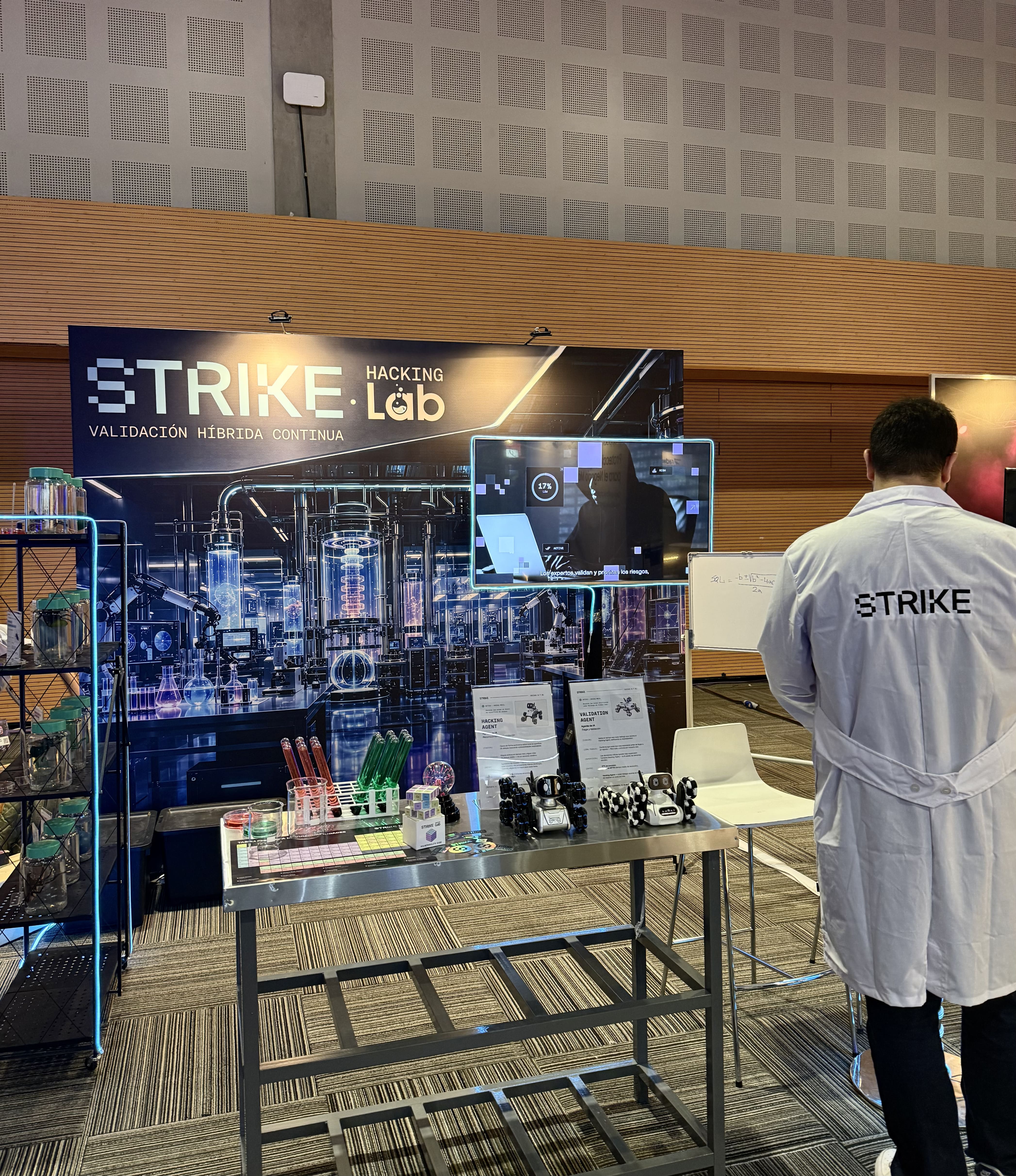
As we do every year, we reunited with the cybersecurity community at Ekoparty Buenos Aires. But this time, we decided to do something different: turn our booth into a laboratory where vulnerabilities took center stage.
That's how Strike Hacking Lab came to life, an experience combining hacking, science, creativity, and plenty of experimentation.
For three days, our space in Hall A was filled with people ready to investigate, solve challenges, discover specimens, and put their skills to the test.
And yes, even our team traded their usual outfits for lab coats and safety goggles.
Welcome to Strike Hacking Lab
The idea was simple: take offensive security concepts beyond the screen and turn them into something people could see, touch, and experience.
The lab had it all: test tubes, lights, plasma globes, specimens under observation, and a rather unusual collection of creatures.
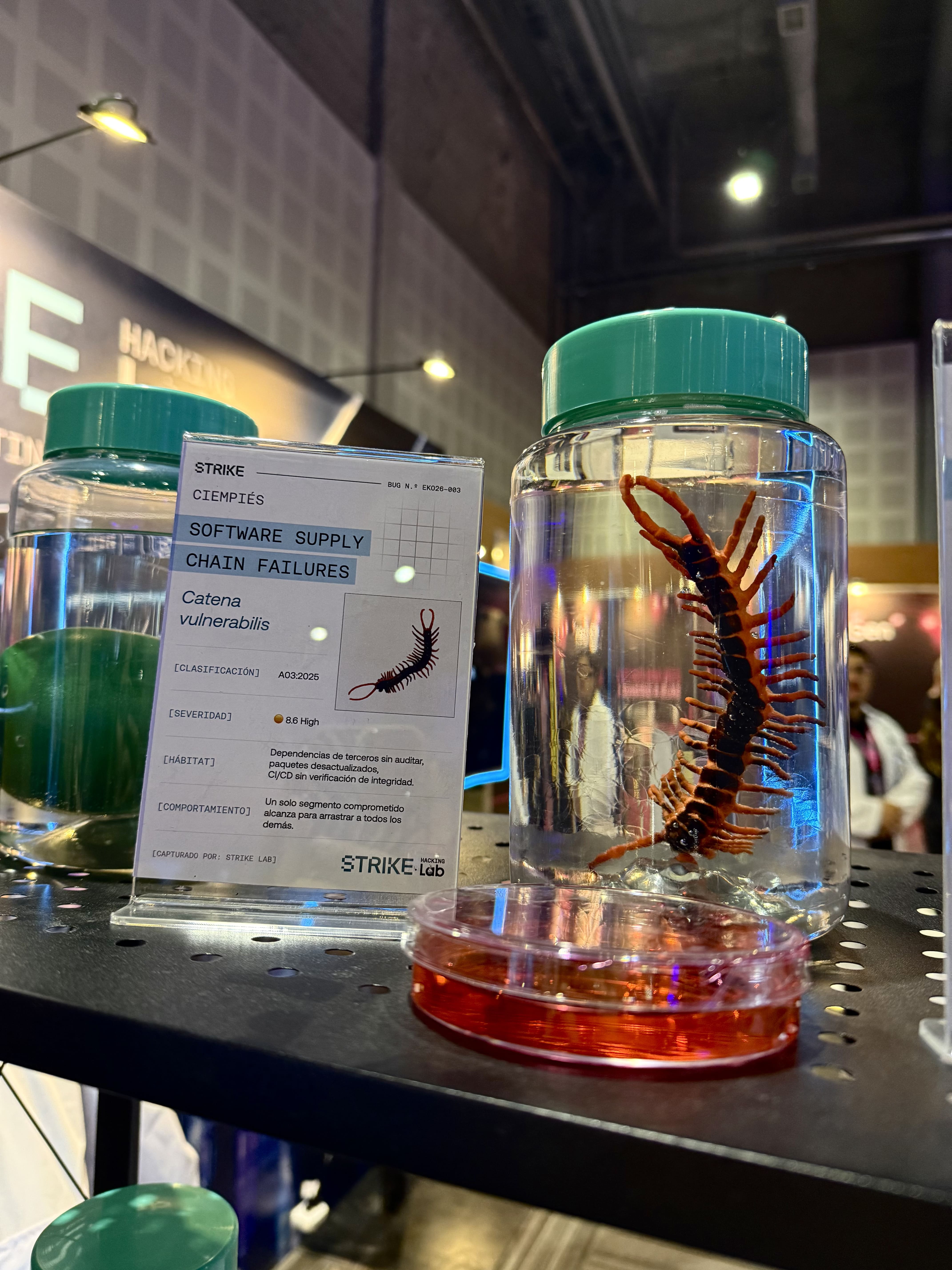
On one of the shelves, jars contained creatures representing captured vulnerabilities under analysis. Each had its own lab record, complete with a name, classification, threat level, and behavioral profile.
There were ransomware specimens, software supply chain failures, and other familiar threats. We even had specimens that hadn't been identified yet, because in security, not everything suspicious comes with an immediate diagnosis.
The concept behind the collection also reflected how offensive security works: finding something suspicious is just the beginning. Next comes investigating it, understanding its behavior, confirming the risk, and figuring out how to address it.
And while some visitors examined the specimens, others were getting ready for the lab's more competitive side.
Five minutes. One challenge. Could you solve it?
One of the highlights of our participation was the Strike Hacking Challenge, an interactive game that invited participants to step into a hacker's shoes.
The rules were straightforward: each participant received one of eight security scenarios and had five minutes to investigate, experiment, and solve the challenge.
This wasn't trivia or a knowledge quiz. Participants had to analyze the scenario, identify what was happening, and demonstrate how a vulnerability could be exploited.
The clock was ticking, and every second counted.
Throughout the three days, the challenge saw constant activity. There was always someone at the screen trying to solve a case, beat a record, or figure out what they had missed.
And those who achieved the fastest times had a chance to win prizes.
.jpeg)
The Hacking Challenge by the numbers
- +250 recorded attempts during the event.
- 53 successfully solved challenges.
- 21.9% success rate: approximately one in five attempts ended in a successful solution.
- 1 minute and 55 seconds average completion time for successfully solved challenges.
- 8 different scenarios that tested a range of skills.
The results also revealed some interesting insights.
Case #066 had the highest success rate, at 46.7%. At the other end of the spectrum, case #154 wasn't solved a single time.
And although participants had five minutes, those who successfully solved their cases needed less than two minutes on average.
The numbers confirmed something we had set out to achieve from the start: a challenge that genuinely required investigation and experimentation, while keeping people thinking about possible solutions even after their time was up.
Because finding a vulnerability is one thing. Understanding how to exploit it and demonstrating its impact is another.
The periodic table of vulnerabilities everyone wanted
Not everything happened in front of a screen.
One of the lab's biggest surprises was our periodic table of vulnerabilities, a reinterpretation of the classic periodic table of chemical elements, featuring cybersecurity concepts and vulnerabilities instead.
XSS, SQL Injection, IDOR, and many others found their place on a table that quickly became one of the most sought-after items at our booth.
The idea was to represent the world of vulnerabilities through a familiar visual language, combining scientific references with hacker culture.
And it worked: countless visitors stopped to explore it, look for vulnerabilities they recognized, discover new ones, and ask how they could get their own copy.
But the periodic table didn't stay on paper.
We also created the Vulnerability Cube, our take on the Rubik's Cube, featuring elements from our periodic table of vulnerabilities across its faces.
An object that combined two things we love: solving problems and playing games.
The cubes passed from hand to hand throughout the event. Some visitors tried to solve them, others explored their combinations, and many wanted to take one home.
In the end, we raffled off the cubes among participants, wrapping up another experience that sparked plenty of curiosity at the lab.
.jpeg)
From the lab to the stage: Strike at Ekoparty
Our participation didn't end at the booth. We also took the stage twice at Ekoparty to share research and discuss some of today's challenges in offensive security.
The Glass Perimeter: When identity itself can be attacked
Javier Bernardo, Head of Hacking at Strike, took the Main Track stage alongside Dan Borgogno to present "The Glass Perimeter: Systematic Bypasses in Biometric Frameworks and the Rise of Synthetic Identity."
The research explored techniques for bypassing biometric frameworks and the challenges posed by the rise of synthetic identities.
Behind the presentation were months of work, experimentation, and technique validation, taking the tests well beyond a simple proof of concept.
As Javo himself put it:
"Months of challenging assumptions, validating techniques, and pushing every test far beyond a polished PoC. None of this was an individual effort. It belongs to the entire team behind it."
A presentation that reflects a fundamental part of our culture: investigating, questioning assumptions, and testing what happens when systems face real-world attack scenarios.
.jpg)
The new ROI of cybersecurity: What's the cost of being late?
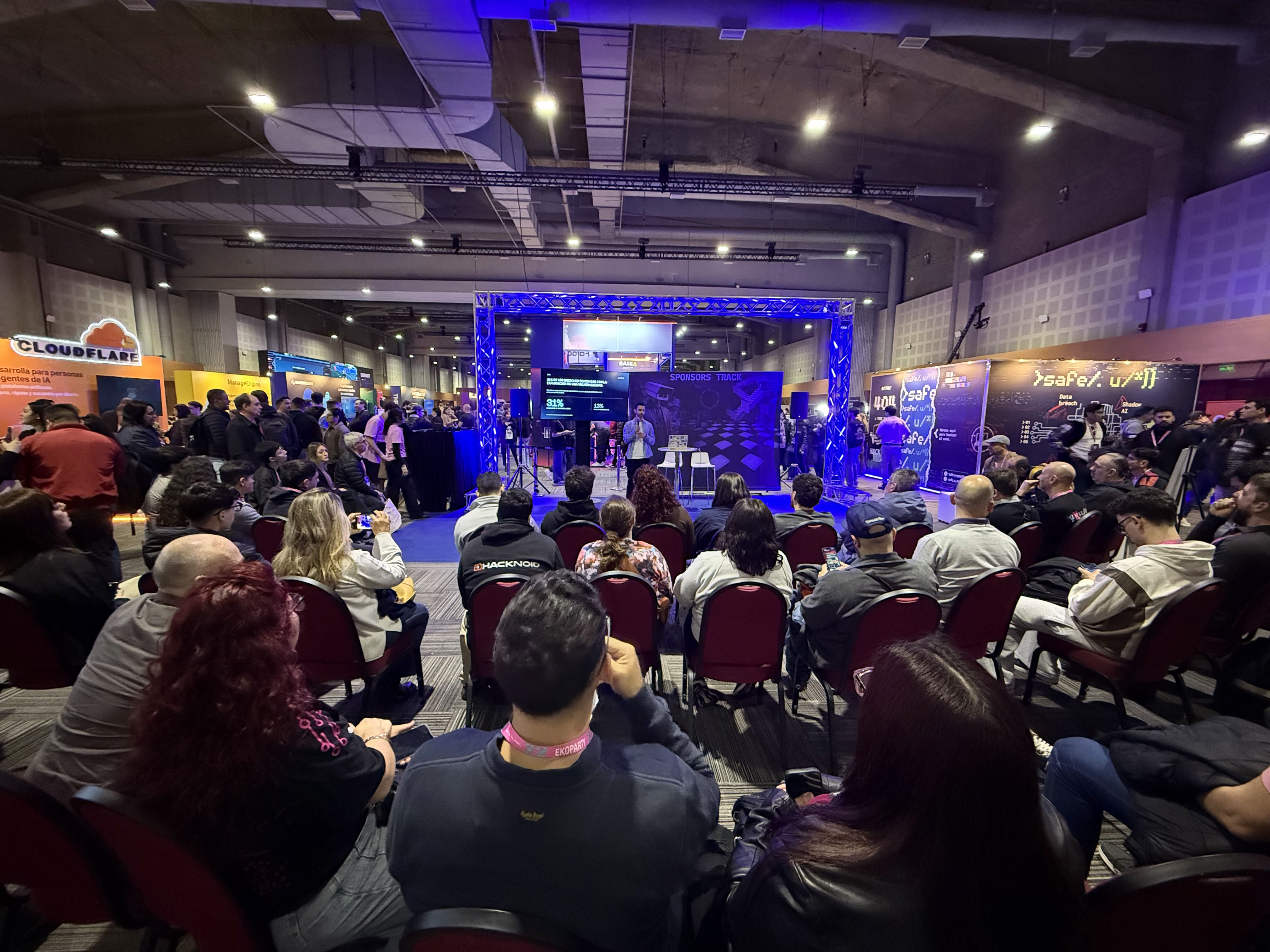
At the Sponsors Track, Nicolás Grinberg, Head of Sales at Strike, challenged the audience to rethink a variable often left out of cybersecurity's return-on-investment equation: exposure time.
Because a vulnerability doesn't start posing a risk the moment we discover it. It may have been present for days, weeks, or months before detection.
During his talk, Nico explored how artificial intelligence and continuous validation are changing the time it takes to detect, validate, and remediate vulnerabilities.
The central argument was that the value of a security strategy shouldn't be measured solely by how many vulnerabilities it finds or how much it costs to implement.
What also matters is how much it reduces an organization's exposure time.
And that leaves us with a question:
If late detection comes at a cost, what's the value of detecting threats on time?
Three days that gave us much more than numbers
Ekoparty is one of those events we look forward to every year. Not just for the talks and research, but for the opportunity to meet people who share our curiosity about how things work and what happens when we put them to the test.
This year, Strike Hacking Lab gave us a different way to do just that.
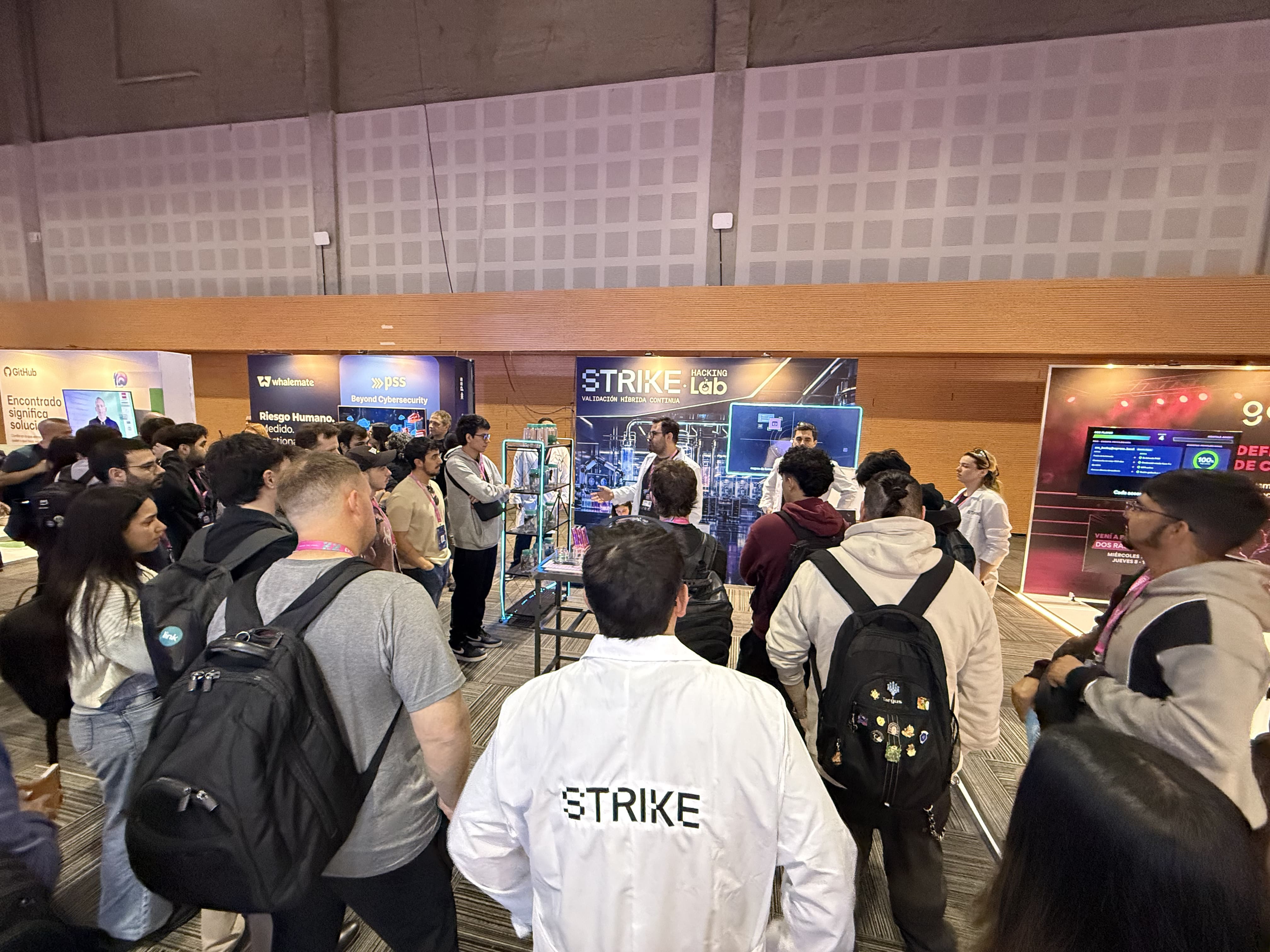
We watched people race against the clock to solve vulnerabilities, debate possible solutions, examine our specimens, try to solve the Vulnerability Cube, and take home a periodic table of vulnerabilities.
We also reconnected with customers, colleagues, friends, and hackers from the community, and met many people discovering Strike for the first time.
Every detail of the lab was the result of tremendous work by our teams, from the creative concept and challenge development to preparing each specimen, material, and experience.
Thank you to everyone who stopped by Strike Hacking Lab, took on the challenges, shared their knowledge, and joined us for these three days.
And thank you to Ekoparty for once again bringing together a community that never stops investigating, experimenting, and challenging the status quo.
See you at the next one.

Get offensive security insights, straight to your inbox
Subscribe to Strike’s newsletter for real-world strategies, threat intel, and expert takes on staying secure in an evolving landscape.