
API penetration testing
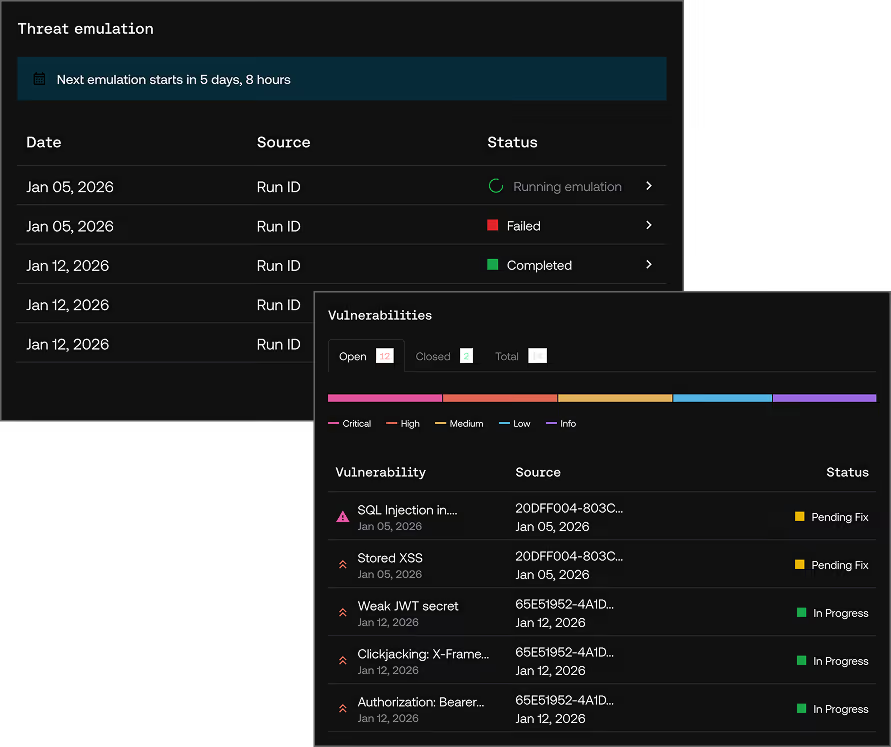
APIs fail differently from the applications in front of them. The serious findings are almost never a missing patch: they are authorization decisions the server never made — an object id that can be changed, a function callable by the wrong role, a field that should never have been writable. Scanners miss them because nothing about the request looks malformed.


For teams whose product is the API
Platform and product teams shipping API changes weekly, where one version bump can quietly widen what an existing token is allowed to do.
Companies exposing partner or public APIs, where the consumer is another system and there is no interface constraining what gets sent.
Teams with a WAF, a passing DAST scan and a green pipeline, and no answer to what one customer's token can actually reach.
The same request, read three different ways
A DAST scan, a web application test and an API test all send HTTP requests, and they disagree about what counts as a finding. The disagreement matters because the most damaging API issues are perfectly well-formed requests that the server should have refused and did not. Something has to know who is allowed to do what, and only one of these three does.
Risk identifiers refer to the OWASP API Security Top 10, 2023 edition — the current one at the time of writing. Note that mass assignment and excessive data exposure, separate entries in the 2019 list, were merged into API3:2023 Broken Object Property Level Authorization.
What an API test actually looks for
Specs, REST and GraphQL: what changes the scoping
Frequently asked questions
What is API penetration testing?
Manual, authenticated testing of an API's endpoints against the OWASP API Security Top 10 and against your own business rules. It covers who can read and write which objects, which functions answer to which roles, how tokens are issued and validated, what the responses give away, and whether legitimate flows can be abused at scale. The deliverable is a set of proven requests, each with the account that sent it and what came back.
Why do scanners miss API vulnerabilities?
Because the request is valid. A scanner detects malformed input, known signatures and error conditions. An authorization flaw produces a perfectly ordinary request and a successful response; the only thing wrong with it is that the caller should not have been allowed. Deciding that requires knowing who the caller is, what they own and what the business rule is, and none of those are in the traffic.
Do you need an OpenAPI or Swagger spec?
Not strictly, but it changes the economics of the engagement. With a current spec, the tester spends the time on testing instead of on reconstructing the surface. Without one, discovery has to come first and part of the budget goes there. Either way the spec is treated as a starting point, since undocumented and deprecated endpoints are consistently among the most interesting findings.
How is GraphQL testing different from REST?
In REST the endpoint is the unit of authorization, so testing walks the endpoint list. In GraphQL there is one endpoint and the unit is the resolver, so the questions become whether every resolver enforces authorization independently, whether introspection is exposed, and whether query depth, aliasing and batching let a single request consume disproportionate resources. Testing tools that assume one URL equals one function are not useful here.
How many accounts and roles should we provide?
At minimum two accounts at the same privilege level, which is what makes horizontal authorization testing possible, plus one account per distinct privilege level for vertical testing. In multi-tenant products, add a second tenant. This is the cheapest way to increase the value of an API engagement, and the most common reason a test comes back thinner than expected is that only one credential was supplied.
How often should APIs be tested?
On the cadence at which the API changes, which for most teams means continuously rather than annually. Authorization regressions are introduced by ordinary feature work: a new field on an existing object, a role added for one customer, an endpoint generalized to serve a second use case. A point-in-time test proves a shape the API had on one day, and API surfaces rarely keep that shape for a quarter.
APIs rarely sit alone. These are the neighbouring surfaces most often bought alongside.
Our solution architecture
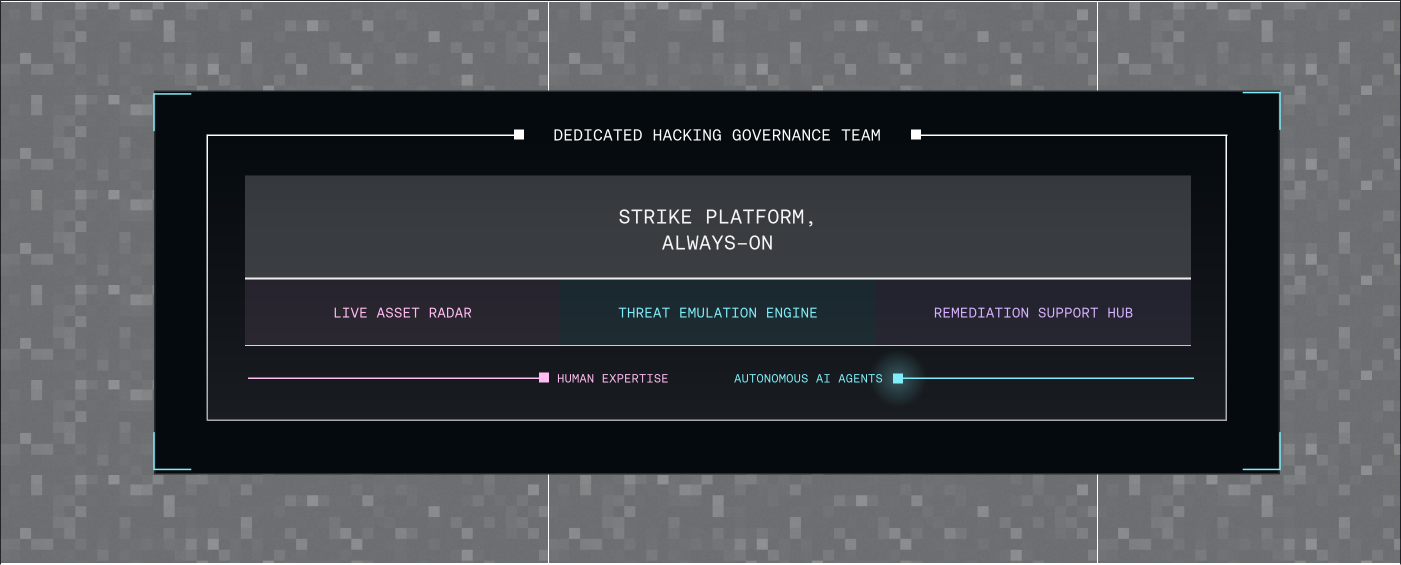
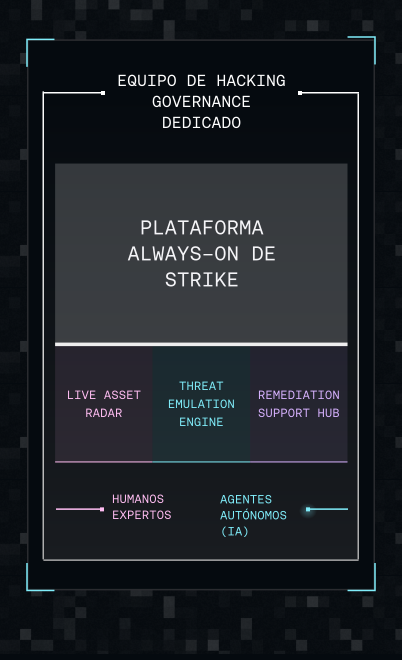
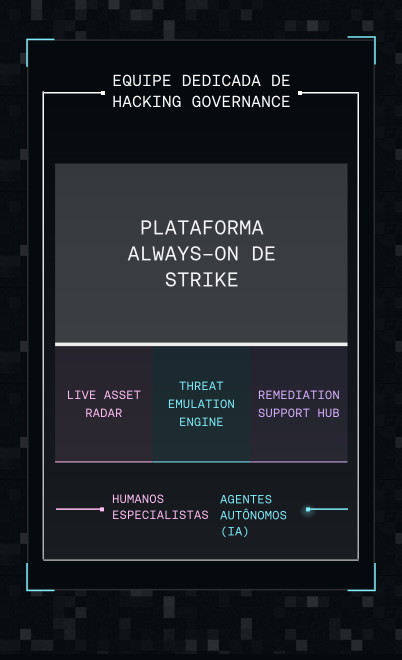
A centralized platform that combines continuous asset monitoring, autonomous threat emulation, and expert remediation support—powered by AI agents, human validation, and a dedicated governance team.
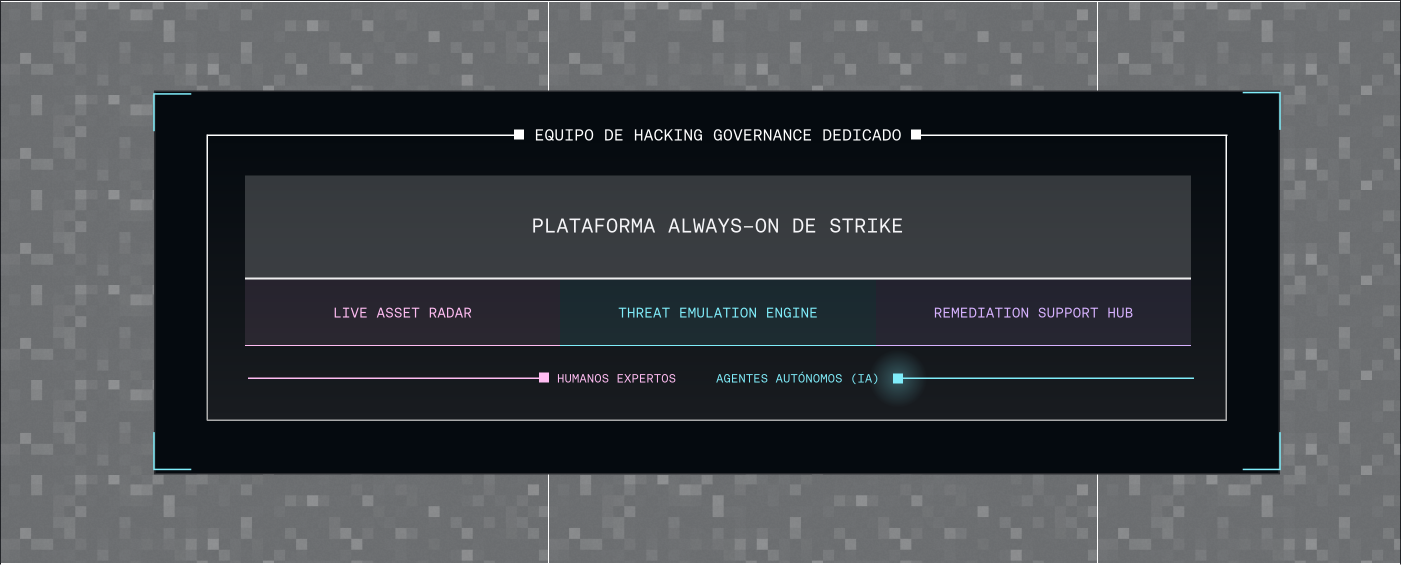
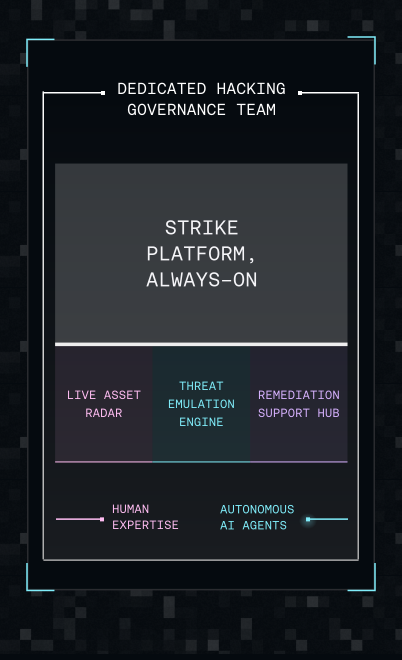
ALWAYS-ON PLATFORM
More than a test. A strategic layer for real security.
Our AI is powered by a proprietary data layer built from thousands of hours of pentesting and real-world validations. Strike combines autonomous execution and expert human validation to uncover complex risks, reduce noise, and prioritize actionable findings.

In-depth continuous testing
Strikers uncover high-impact vulnerabilities across multi-technology environments (web apps, APIs, mobile, cloud, and more).

AI-led retesting on-demand
Validate fixes instantly, without waiting for the next testing cycle.

Real-time fixing
AI agents guide your team step-by-step through remediation to accelerate resolution.

Step-by-step Threat emulation creation
Easily scope, launch, and track your Threat emulation with full transparency.

Human triaging & peer review
Every finding is validated by security experts to ensure accuracy and impact.

Full visibility
Track every finding with complete transparency through security expert work logs and real-time notifications.

Seamless integrations
Connect directly with Slack, Teams and Jira to streamline collaboration with your security and development teams.

Vulnerability Manager
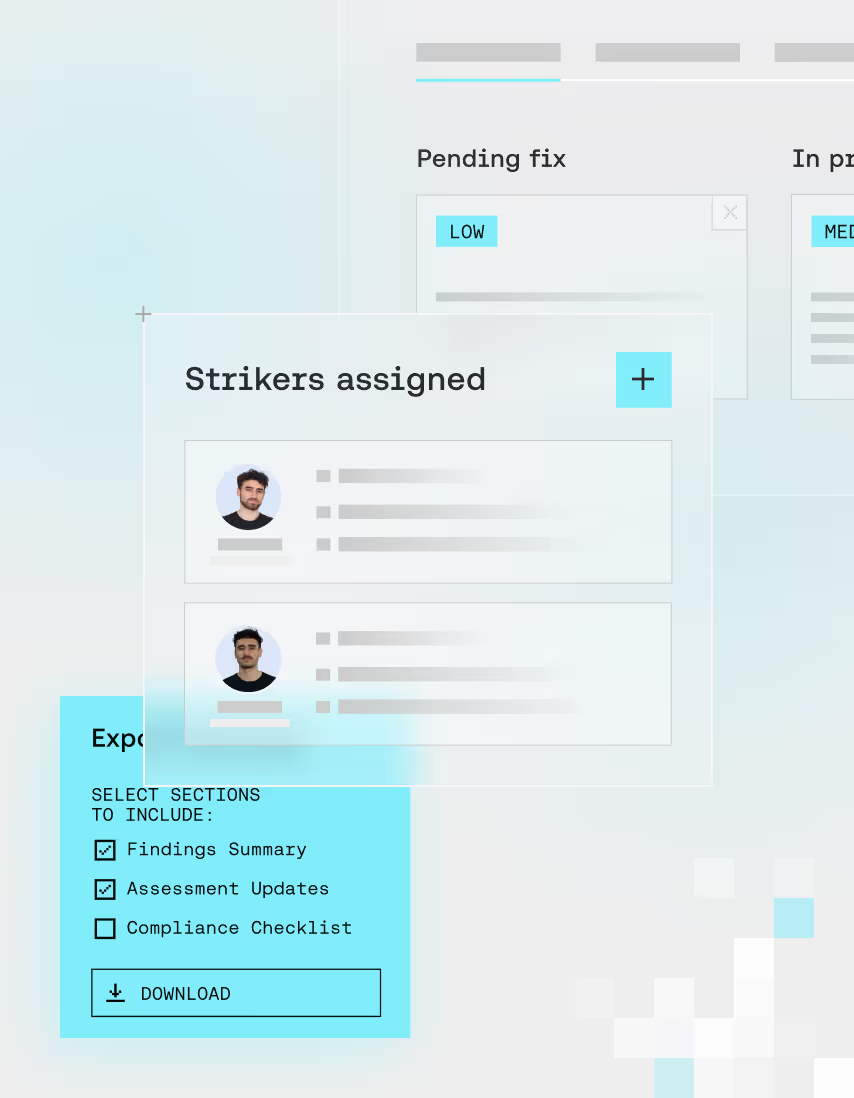
Visualize, manage, and retest vulnerabilities in one platform, with full context on severity, sources, and remediation.

Compliance-ready reporting
Automatically generate up-to-date reports aligned with PCI DSS, HIPAA, ISO 27001, SOC 2, and more.

Ongoing partnership
Weekly check-ins with a dedicated Customer Success Manager, plus personalized onboarding and strategic planning.
More than an offensive security platform, Strike operates as a continuous validation layer for environments that never stop changing.

Trusted by security teams that lead






Human expertise.
AI power.
Superior security.
Whether you’re scaling fast, closing enterprise deals, or just tired of noisy reports, we’ll help you build a security stack that moves faster than your threats.
