
What is continuous penetration testing?
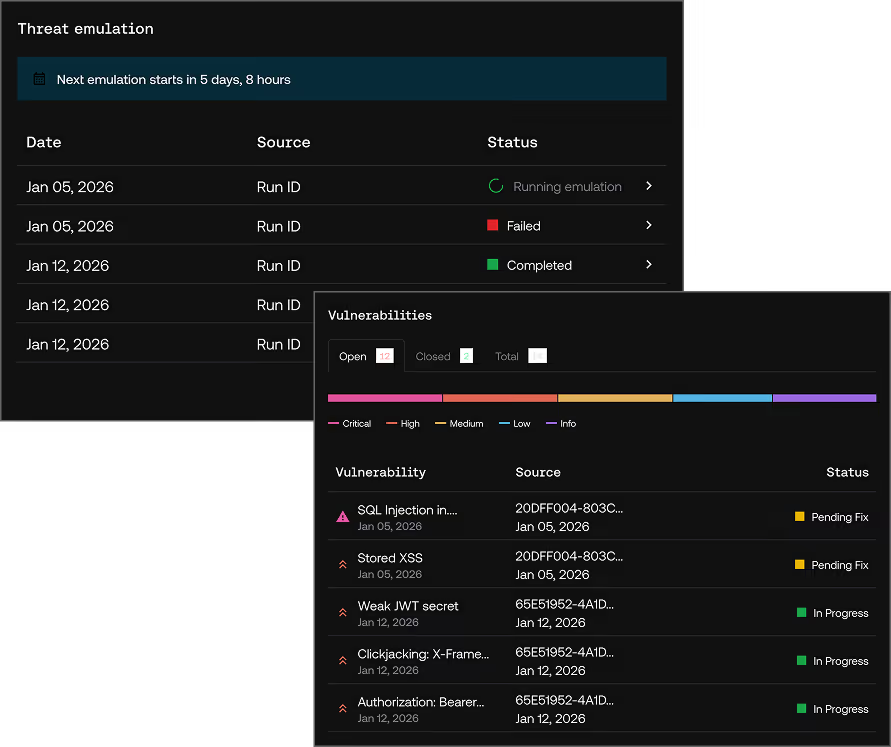
Continuous penetration testing is offensive security run on a recurring, change-triggered cadence rather than once a year. The goal is not to produce more findings, but to shorten the time an exploitable vulnerability stays open: the window between an exposure appearing and someone verifying it.

Which teams does it make sense for?
Security teams whose attack surface changes weekly, who need testing that runs continuously instead of freezing risk into a single annual snapshot.
Fast-moving organizations that push code daily and want new exposures surfaced as they appear — not discovered months later in the next assessment.
Leaders accountable for real coverage who need always-on validation and evidence they can defend to auditors, boards, and customers year-round.
Why continuous rather than annual?
An annual pentest describes one date. Everything shipped after it is untested until the next cycle. Continuous testing does not replace the depth of a focused manual engagement, it reorders it in time. The honest comparison is that the annual test measures a photograph and the continuous one measures a series. Mature programs run both.
1 - Discovery: Strike maps the web and API attack surface and keeps it current as it changes. Assets that are not web or API, such as mobile, infrastructure and networks, are covered by expert-led manual testing under Projects.
2 - AI-led continuous testing: autonomous testing runs continuously across new and modified assets, at the depth and frequency configured when each asset is activated.
3 - Expert validation and triage: expert human validation before customer delivery, so you get proof rather than noise (97% precision and under 3% false positives, Strike-reported).
4 - Remediation and retest: guided remediation plus retesting when a fix ships. Retesting availability depends on the subscribed scope.
Continuous penetration testing, continuous pentesting, continuous security testing
Three names, one practice: offensive testing that runs on an ongoing cadence instead of once a year. Continuous penetration testing is the formal term, continuous pentesting the shorthand most security teams use, and continuous security testing a broader label that also covers non-exploitative checks. Vendors use all three interchangeably, so read the scope, not the label.
What none of the three names means is a scanner left switched on. A scanner running continuously produces continuous output; continuous penetration testing produces continuously validated findings. The difference is the exploitation step and the expert human validation before customer delivery — without both you get volume, not proof.
The label also says nothing about frequency. Ask any vendor what actually starts a test. At Strike, testing can be triggered by changes according to the configured scope, and the depth and frequency of each run are set when the asset is activated. Coverage depends on the authorised scope and access.
What continuous penetration testing changes for a security leader
Moving from an annual project to continuous pentesting changes five things a security leader is accountable for. None of them is more findings.
1 - Risk management becomes forward-looking. Exposures surface as they appear rather than being catalogued after the fact, so the conversation with the board is about the size of the exposure window instead of the age of the last report.
2 - Posture becomes a series, not a snapshot. A point-in-time report starts ageing the day it is signed; a continuous programme keeps a current view of what has been tested and what has not.
3 - Evidence accumulates instead of expiring. Validated findings and reports are produced year-round, which supports audit and compliance programs built on frameworks such as SOC 2, ISO 27001 and PCI DSS. Strike does not issue certifications, reports or attestations for those frameworks: that decision belongs to the auditor.
4 - Incident response starts from a known map. When something happens, the team already has a current inventory of the web and API attack surface and a validated record of what was exploitable, instead of reconstructing both under pressure.
5 - The programme compounds. Recurring finding patterns show which controls, standards and code paths to fix at the root, so each cycle should surface fewer defects of the same class.
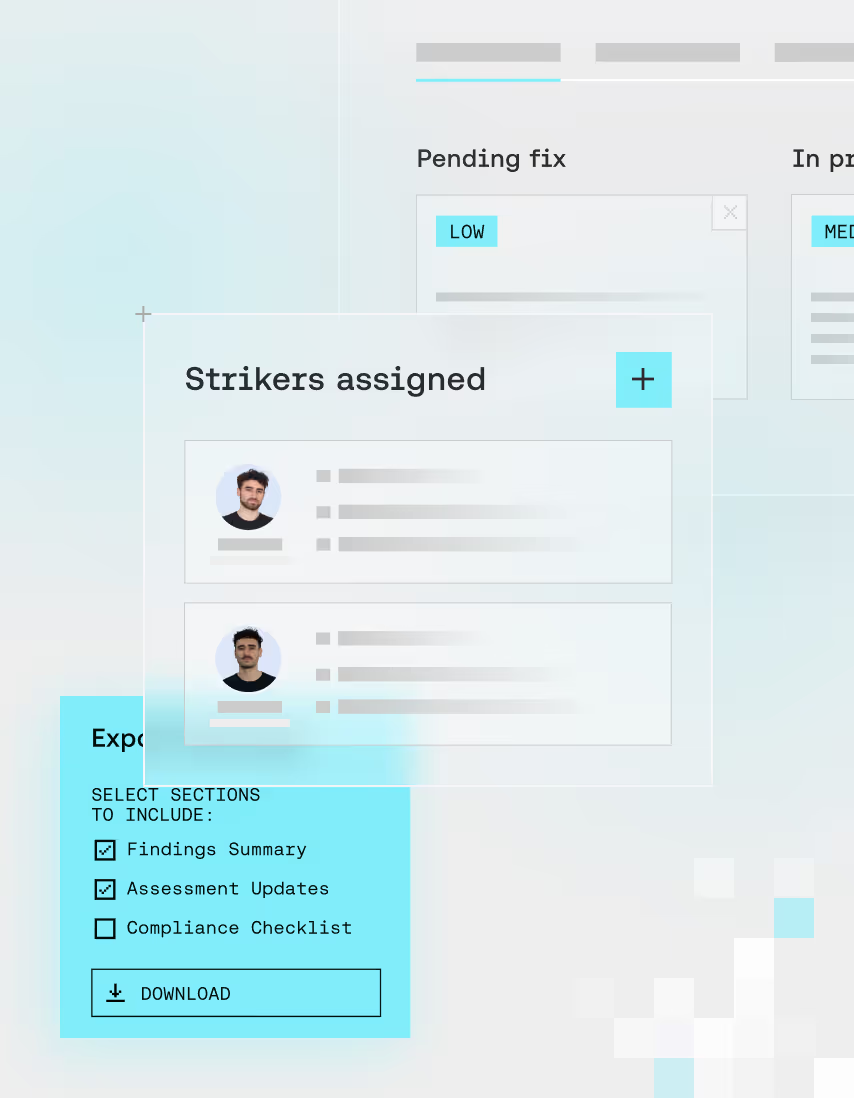
Who does the validating matters as much as the cadence. Expert human validation before customer delivery is carried out by Strike's community of offensive security professionals, the Strikers, whose credentials include certifications such as OSCP, OSWE and OSWP (source: Strikers, accessed 29 July 2026). Strike reports 97% precision and under 3% false positives on that validated output; the method is on How we measure results.
Continuous pentesting, answered
What is continuous penetration testing?
Continuous penetration testing is offensive security delivered as an always-on service rather than a one-off annual project. Strike runs AI-led testing continuously and applies expert human validation before customer delivery, so vulnerabilities are found and proven as the attack surface changes, not months later.
How is it different from an annual pentest?
An annual pentest evaluates a snapshot in time; everything deployed afterwards goes untested until the next project. Continuous pentesting keeps evaluating as changes ship and lets you launch retests when you fix or release, subject to the subscribed scope, keeping the exposure window in days rather than months.
Does it replace a vulnerability scanner or DAST?
No, it complements them. Scanners and DAST flag potential issues automatically and generate noise; continuous pentesting exploits and validates real vulnerabilities with expert hackers, so you fix confirmed risk. Many teams run both: scanners for breadth, Strike for validated depth.
How does Strike validate findings?
Strike combines AI-led execution with expert human validation before customer delivery, with proof of exploitation and remediation guidance. That is how Strike sustains 97% precision and under 3% false positives. Both are Strike-reported; the method is on the methodology page.
Does continuous pentesting support SOC 2, ISO 27001 or PCI DSS?
Strike provides continuous testing and reports that support the organisation's audit and compliance programs, including those built on frameworks such as SOC 2, ISO 27001 and PCI DSS. Strike does not issue certifications: that decision belongs to the auditor.
How long does it take? The three timings, unmerged
Strike works as a continuous subscription scoped to the attack surface rather than a one-off project, so pricing follows scope. Three moments are worth separating, because they are three different clocks and should not be read as one: platform setup takes under 5 minutes on supported scopes; execution start depends on the authorised scope and on access being granted; and the curated set of findings is delivered in 1-2 hours from execution, with the first validated finding at approximately one hour. Strike-reported.
How often does continuous penetration testing actually run?
There is no single number, and a vendor quoting one is describing a schedule rather than a scope. At Strike, testing can be triggered by changes according to the configured scope, and the depth and frequency of each run are set when the asset is activated. Coverage depends on the authorised scope and the access granted.
How does continuous pentesting fit an incident response programme?
It shortens the reconstruction step. A continuous programme keeps a current map of the web and API attack surface and a validated record of what was exploitable and when, so responders start from evidence instead of assembling it mid-incident. Findings are prioritised by severity and impact and come with remediation guidance; retesting availability depends on the subscribed scope.
Trusted by security teams that lead






Human expertise.
AI power.
Superior security.
Whether you’re scaling fast, closing enterprise deals, or just tired of noisy reports, we’ll help you build a security stack that moves faster than your threats.
